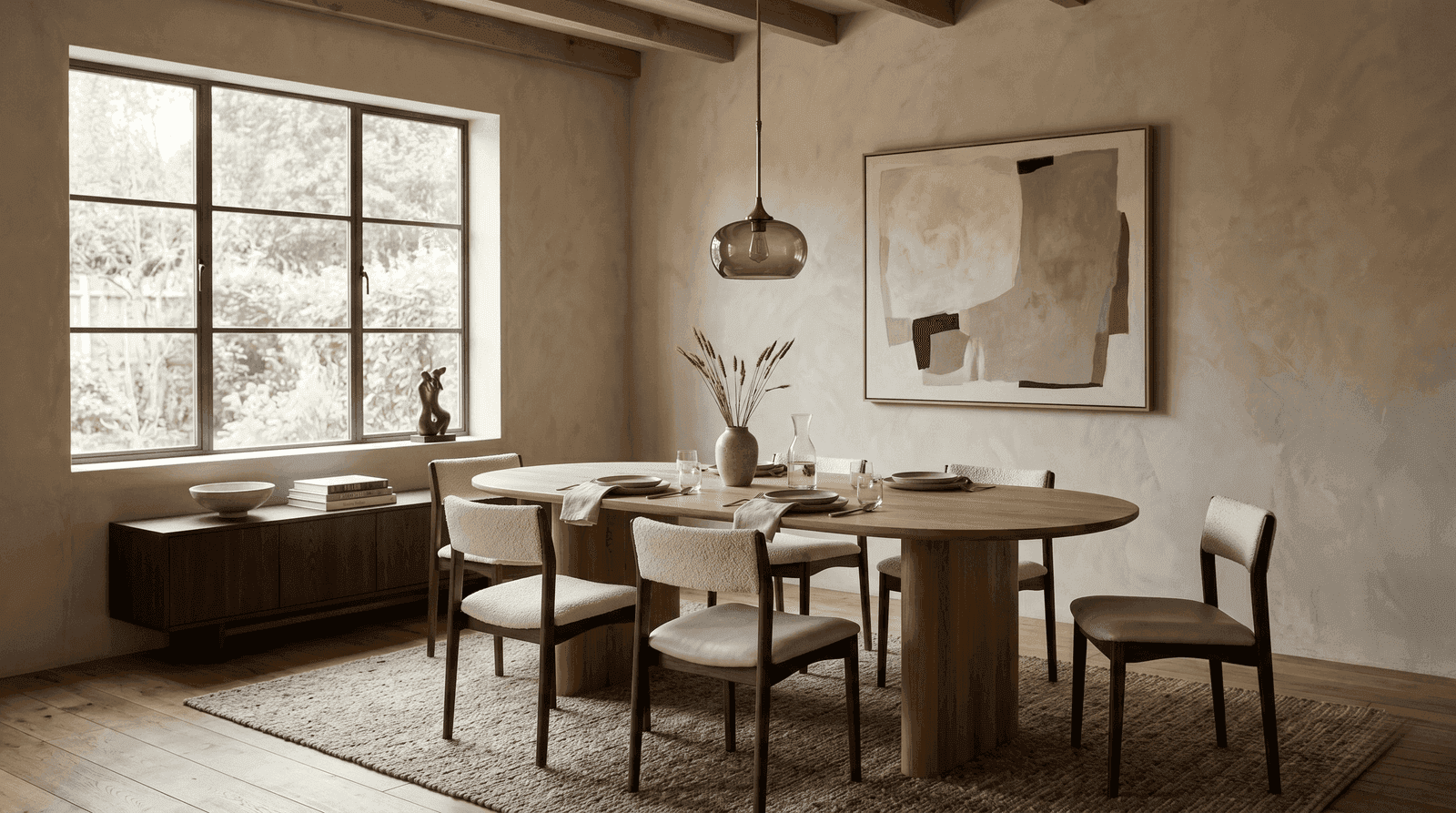
Minimalism has a reputation problem. For a lot of people, the word brings up empty white rooms, cold furniture, bare walls, and spaces so sparse they feel less 'peaceful retreat' and more 'someone moved out in a hurry.' That is minimalism without warmth.
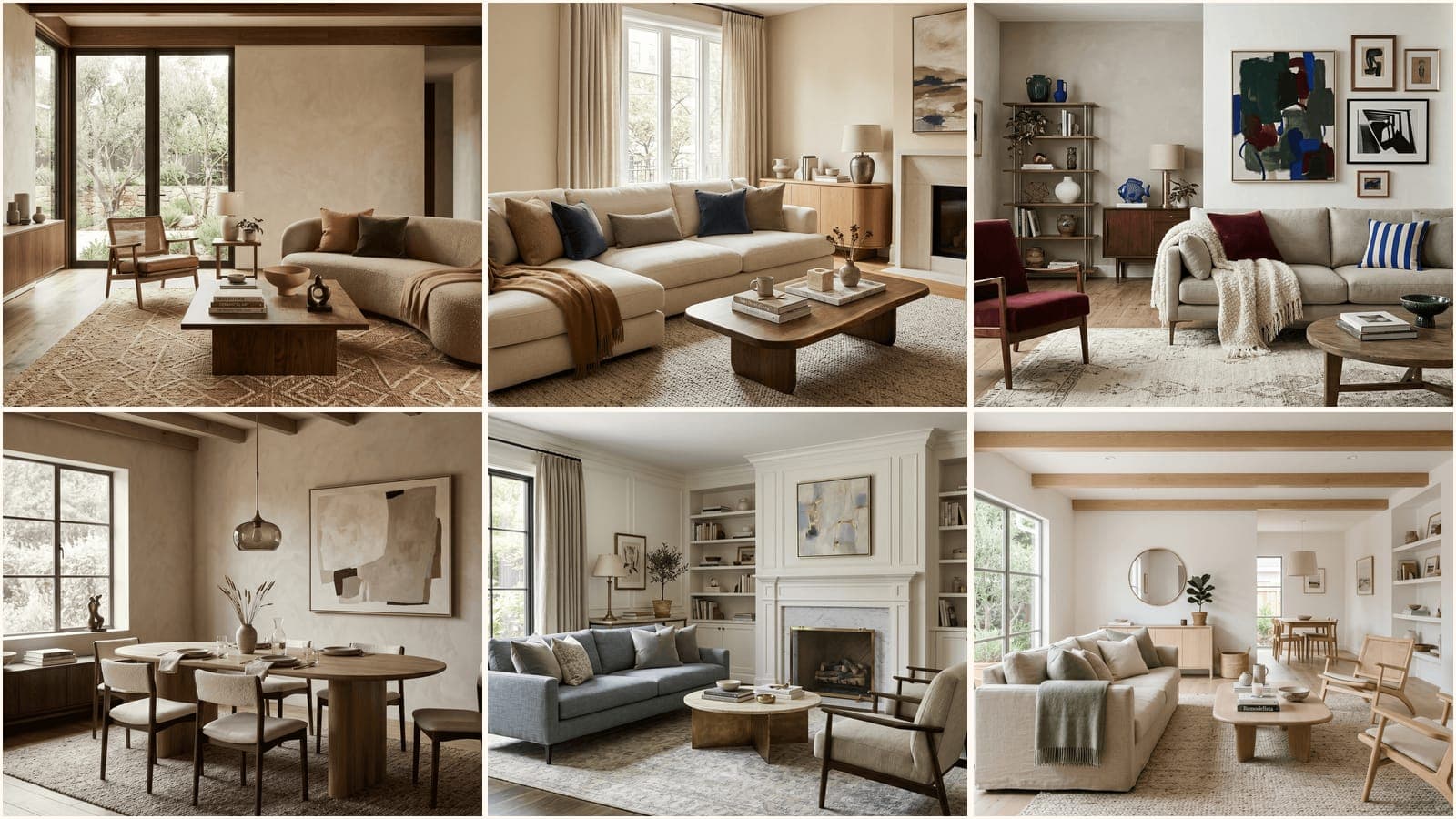
Moody Minimalist takes a different approach. It is still edited. Still intentional. Still free of clutter and visual chaos. But instead of relying on stark white walls and razor-sharp contrast, it builds atmosphere through tonal color, sculptural forms, natural materials, and soft shadow.
This style is not about making a room dark for the sake of drama. It is about creating depth without heaviness. Calm without emptiness. Restraint without making your home feel like a very expensive waiting room.
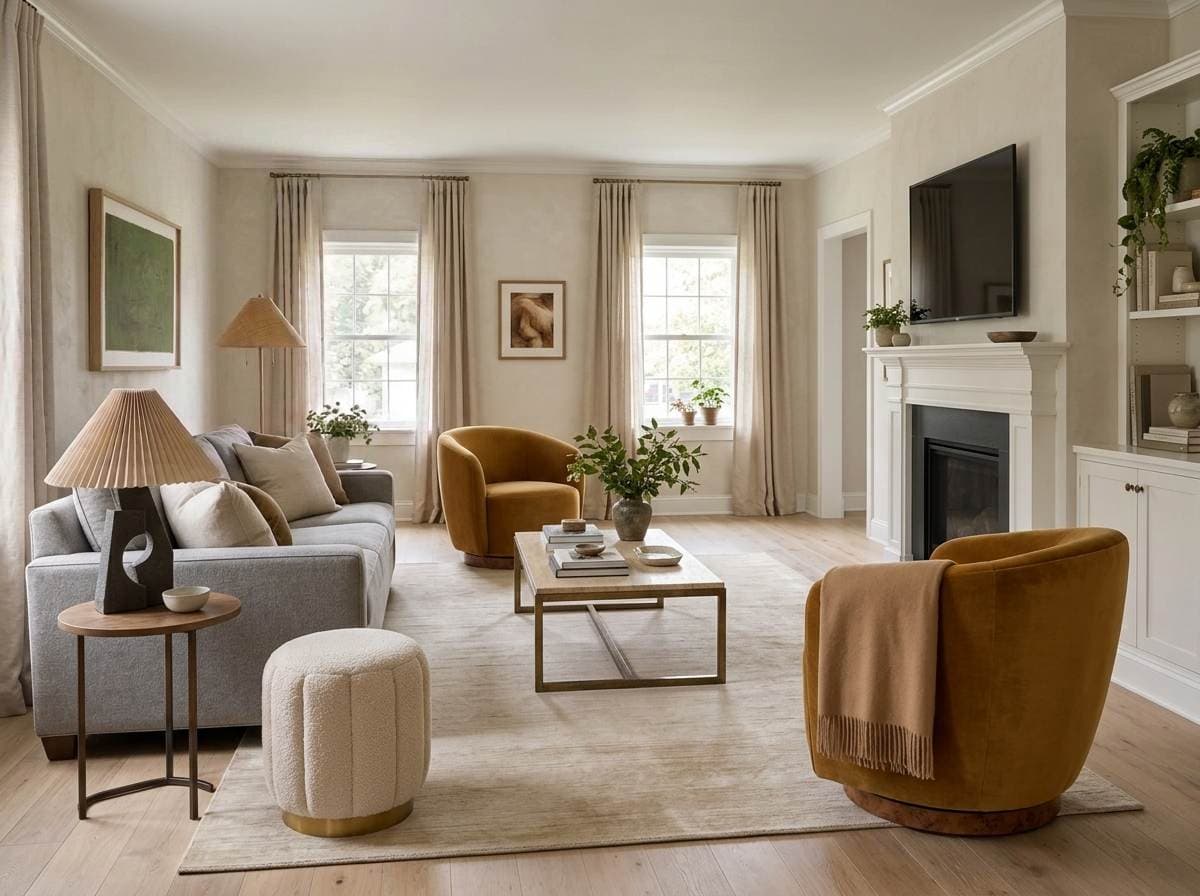
Moody Minimalism is warm, tonal minimalism with sculptural furniture, quiet contrast, soft texture, and just enough edge to keep things interesting.
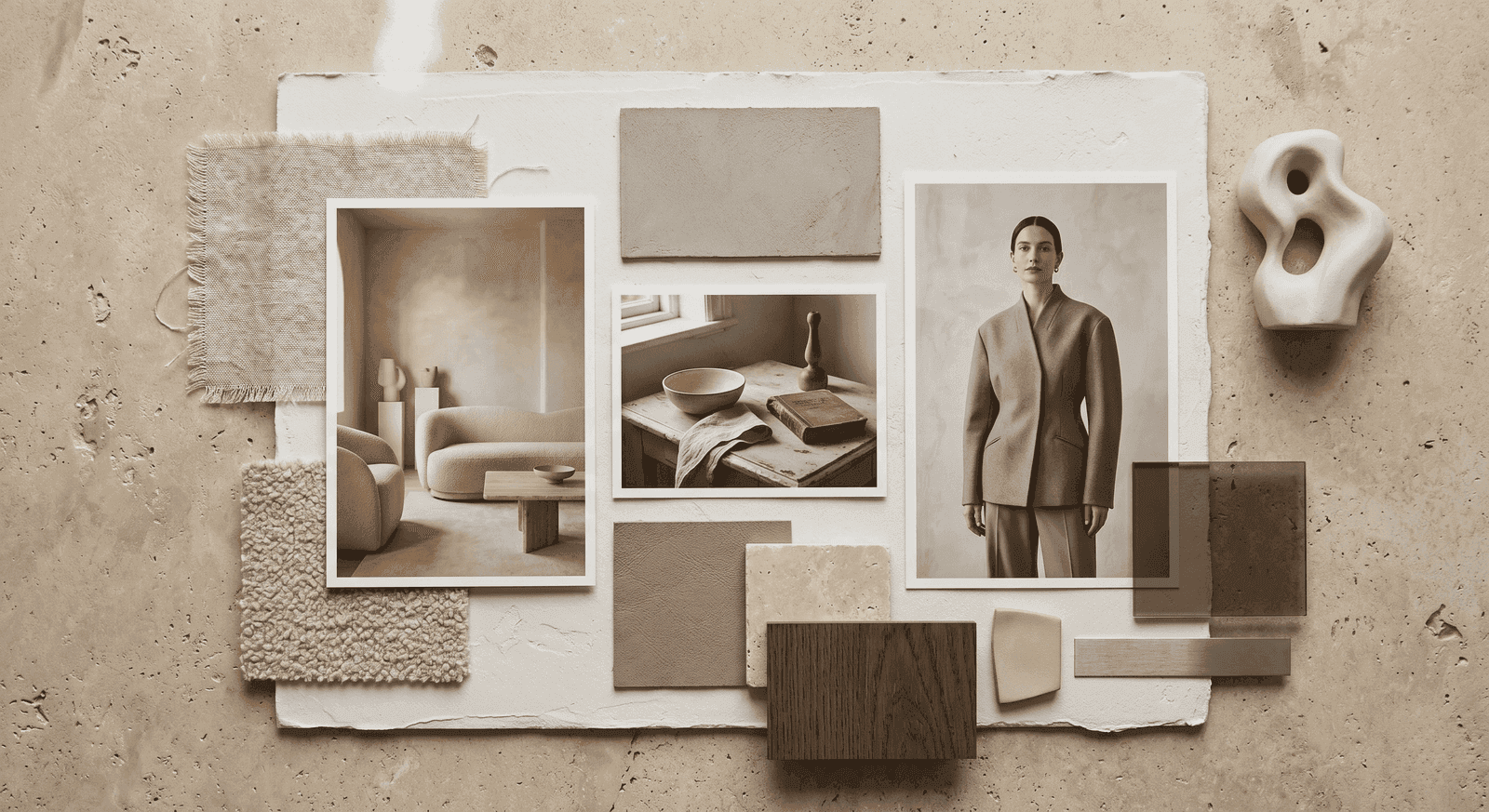
Start with a Moody Minimalist palette
Moody Minimalist does not need to mean black walls and a black sofa and black art and then wondering why your living room feels like a boutique hotel lobby having an emotional crisis. The palette should feel muted, warm, and layered, instead of sharp black-and-white contrast, think tonal shifts that create depth.
- —Warm off-white
- —Putty
- —Mushroom
- —Taupe-gray
- —Clay
- —Stone
- —Soft espresso
- —Muted brown
- —Softened charcoal
Dark accents are welcome, but they should be used sparingly. A blackened metal lamp. A smoked glass table. A deep espresso chair. A charcoal artwork. The goal is definition, not domination. The best Moody Minimalist palettes feel like shadow passing across plaster, not like someone painted the room black and called it a personality.
Keep contrast soft, not severe
The updated version of moody minimalism is softer and more livable. Instead of a pale sofa screaming against a dark wall, try a more tonal mix:
- —A mushroom sofa against warm plaster walls
- —A clay chair on a stone-colored rug
- —A soft espresso table against taupe upholstery
- —Warm white ceramics on a muted brown shelf
- —A softened charcoal lamp near linen drapery
This is where the style gets its quiet power. The room does not need to shout. It just needs enough variation in tone, texture, and shape to hold your attention. Very adult. Mildly suspicious, but adult.
Texture does the heavy lifting
In a Moody Minimalist room, you are not using a lot of pattern, color, or decorative layering. So texture has to do more work. The materials should feel tactile, matte, and grounded. Nothing should feel too shiny, slick, or glam. The finish matters: matte over glossy, honed over polished, soft over sharp, aged over brand-new-looking. The goal is depth, not sparkle.
- —Plaster or limewash
- —Micro-cement
- —Linen
- —Wool
- —Bouclé
- —Soft leather
- —Natural wood
- —Stone
- —Ceramic
- —Smoked glass
- —Brushed or aged metal
Choose sculptural, low-profile furniture
Moody Minimalist rooms rely heavily on shape. Since the palette is restrained, the silhouette of each piece matters. Look for furniture with low, grounded profiles, soft curves, clean lines, generous proportions, and sculptural forms. The key is to avoid anything too thin, flimsy, or visually nervous. Moody Minimalist furniture should feel calm, settled, and intentional.
- —Low, grounded profiles
- —Soft curves
- —Clean lines
- —Generous proportions
- —Sculptural forms
- —Simple but substantial shapes
The five pieces that define the room
1. The sofa
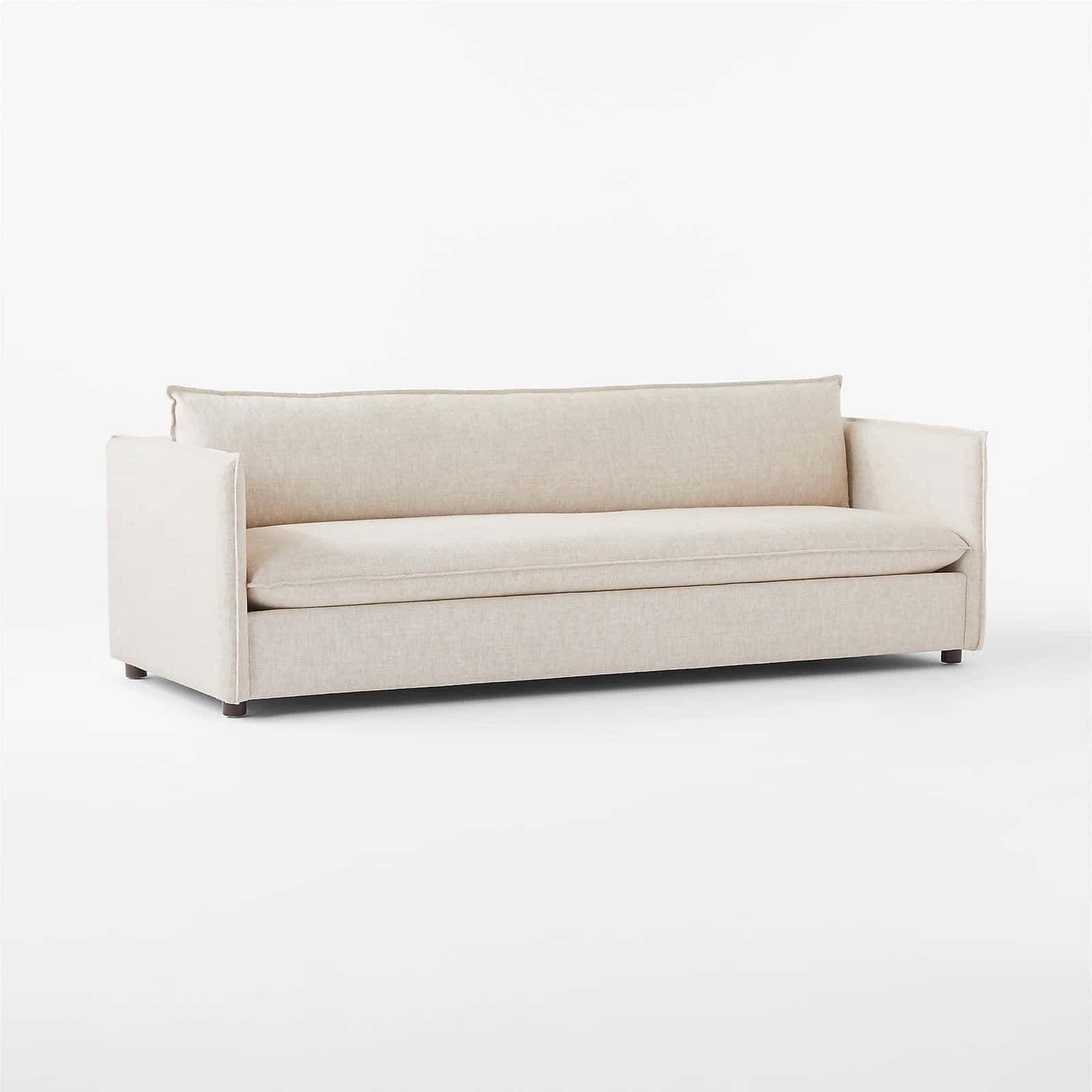
Choose a low, clean-lined sofa in a warm neutral like mushroom, stone, oatmeal, putty, taupe, or soft ivory. It does not need to be bright white, in fact, a slightly deeper neutral often works better because it keeps the room feeling soft and tonal instead of high-contrast and staged.
2. The coffee table
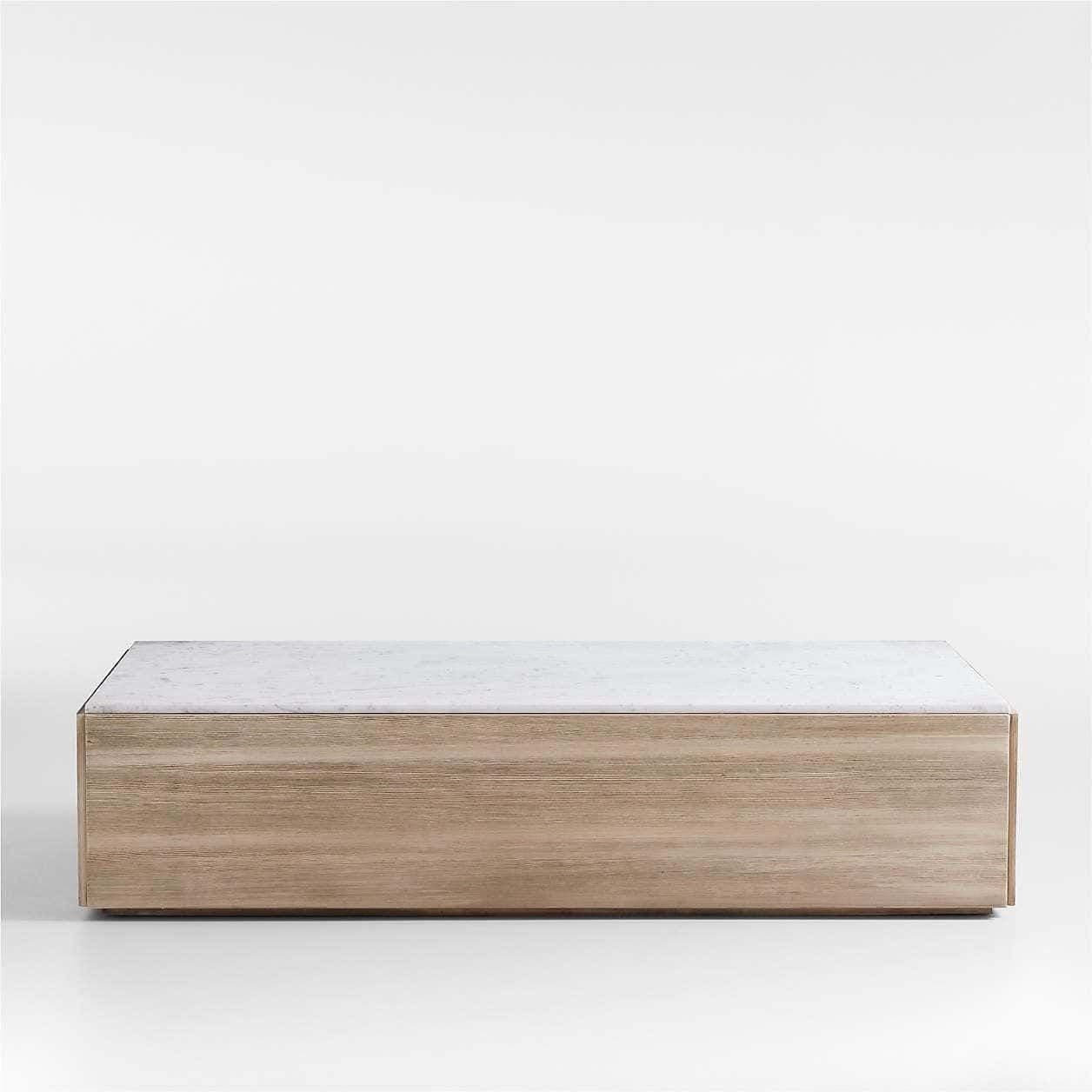
This is where you can bring in weight. A plinth table, stone block, soft-edged wood form, smoked glass table, or monolithic ceramic piece works beautifully. Keep the styling restrained: one ceramic vessel, a low bowl, a stack of books, or a sculptural object is enough.
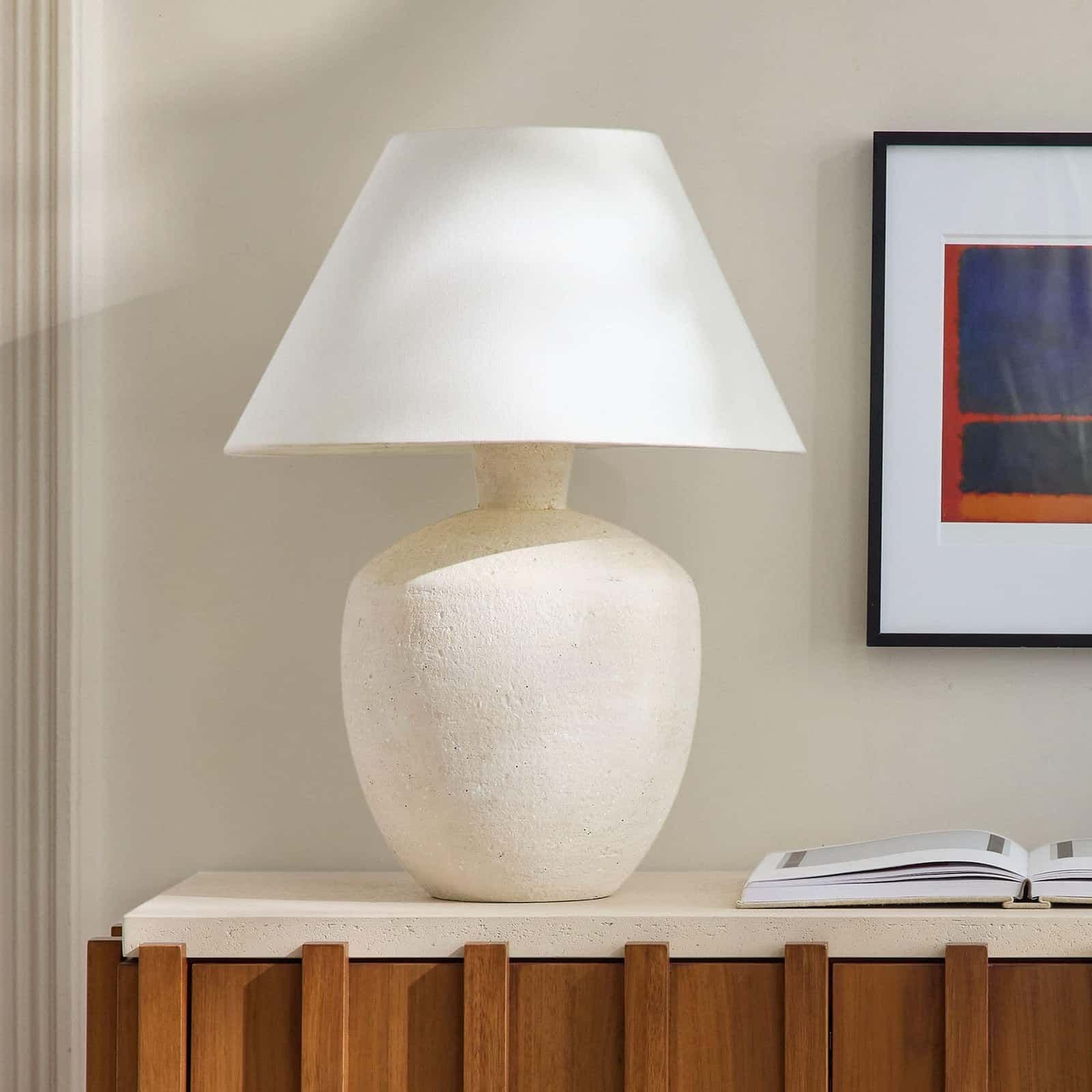
3. The lighting
Lighting is everything in a Moody Minimalist room, not 'nice to have,' not 'we'll get to it later.' Everything. The goal is soft shadow, not bright overhead interrogation lighting. This style depends on gentle contrast and atmosphere. Bad lighting will flatten the whole thing instantly.
- —A low floor lamp
- —A sculptural table lamp
- —Wall sconces
- —Recessed lighting on dimmers
- —A statement pendant with a soft glow
- —Concealed or indirect lighting where possible
4. The art
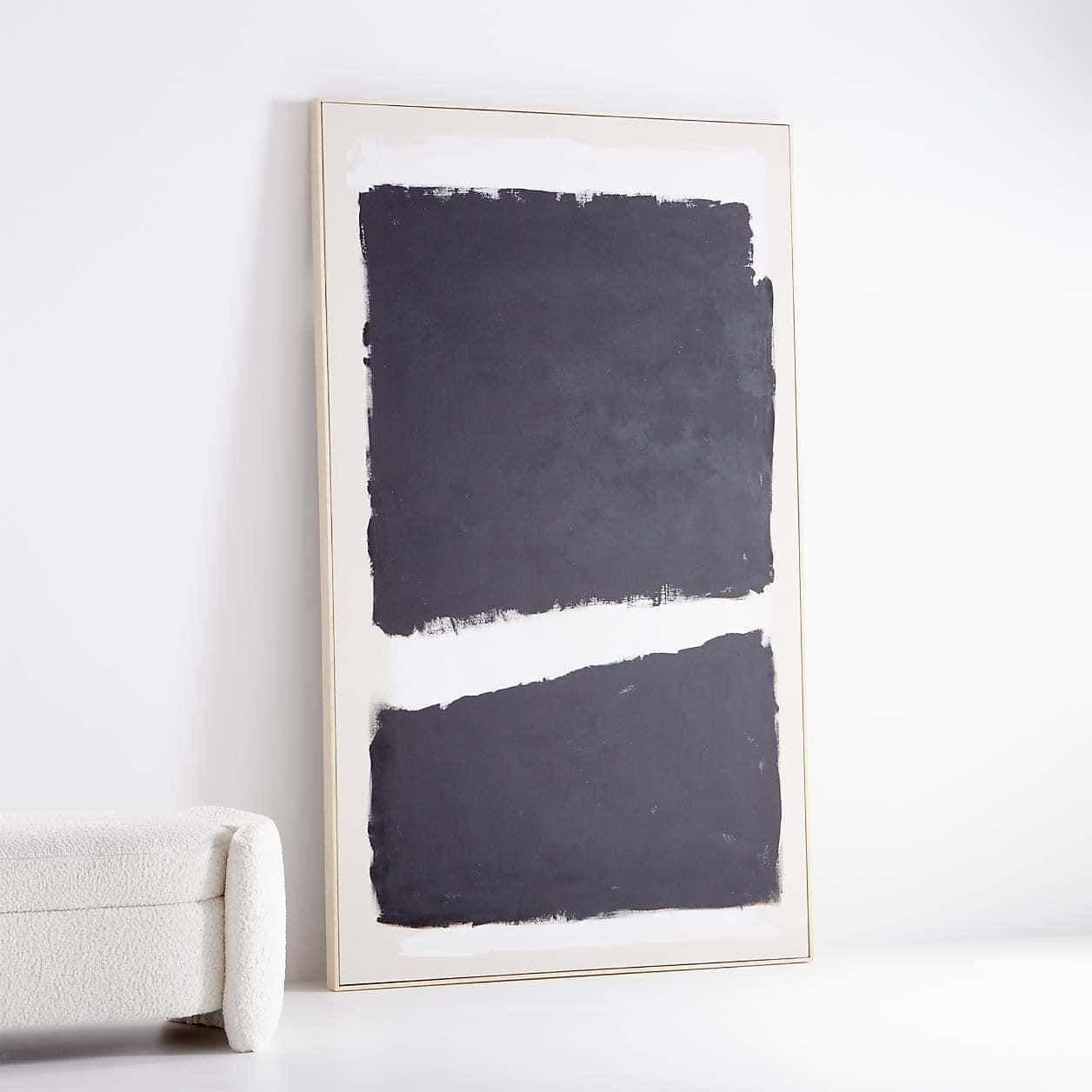
Keep the art large, simple, and atmospheric. This is usually not the place for a busy gallery wall. One strong piece with room to breathe will do more than six small pieces fighting for custody of the wall.
- —Tonal abstract work
- —Black-and-white photography
- —Textured canvas
- —Minimal landscape forms
- —Soft geometric compositions
- —Oversized pieces with negative space
5. The sculptural object
Moody Minimalist still needs a finishing layer, it just needs fewer, better things. Choose one or two pieces with real presence. The object should feel intentional, not decorative filler. If it looks like it was purchased because the shelf 'needed something,' it probably does not belong.
- —An oversized ceramic vessel
- —A stone object
- —A smoked glass bowl
- —A sculptural lamp
- —A handmade tray
- —A quiet organic form

Common mistakes
Going too dark
Moody does not mean gloomy. A room can be atmospheric without looking like it is hiding secrets. Use darker tones sparingly and balance them with warm materials, soft textiles, and natural light.
Forgetting warmth
This style falls apart when everything gets too cool. Cool gray walls, black furniture, chrome accents, and white LED lighting will make the room feel harsh fast. Use warm undertones. Always.
Using too much stuff
Minimalism still matters here. Every piece needs to earn its place. If the room feels busy, remove something. If a surface feels over-styled, simplify it.
Choosing furniture that is too sharp
Moody Minimalist works best when the forms are sculptural, softened, and grounded. Too many hard edges can make the room feel severe. Balance clean lines with curves, soft upholstery, rounded tables, and organic shapes.
Getting the lighting wrong
Bright overhead lighting will ruin this style immediately. Use dimmers. Use lamps. Use multiple light sources. Let shadows exist. Shadows are not a design flaw. They are doing the work.
Where to start
- Choose a warm tonal palette instead of stark black and white.
- Add texture through plaster, linen, wool, wood, stone, or ceramic.
- Use low, sculptural furniture with clean but softened forms.
- Replace harsh lighting with warm, layered, dimmable sources.
- Style with fewer, stronger objects instead of lots of small decor.
- Add one large piece of atmospheric art with room around it.
Nervous about committing to darker walls? Upload a photo to Room Edit and ask for a moodier version of your room with a warm tonal palette and layered lighting, keeping the furniture and layout the same. Not sure you are a minimalist at heart? Take the Blueprint Style Quiz.
You do not need to empty the room. You need to edit it. Less noise. More atmosphere. Better furniture choices. Humanity survives another day.
.png&w=1920&q=75&dpl=dpl_HsFNKev5vESE4Fpfsy7iSSi9PpFZ)