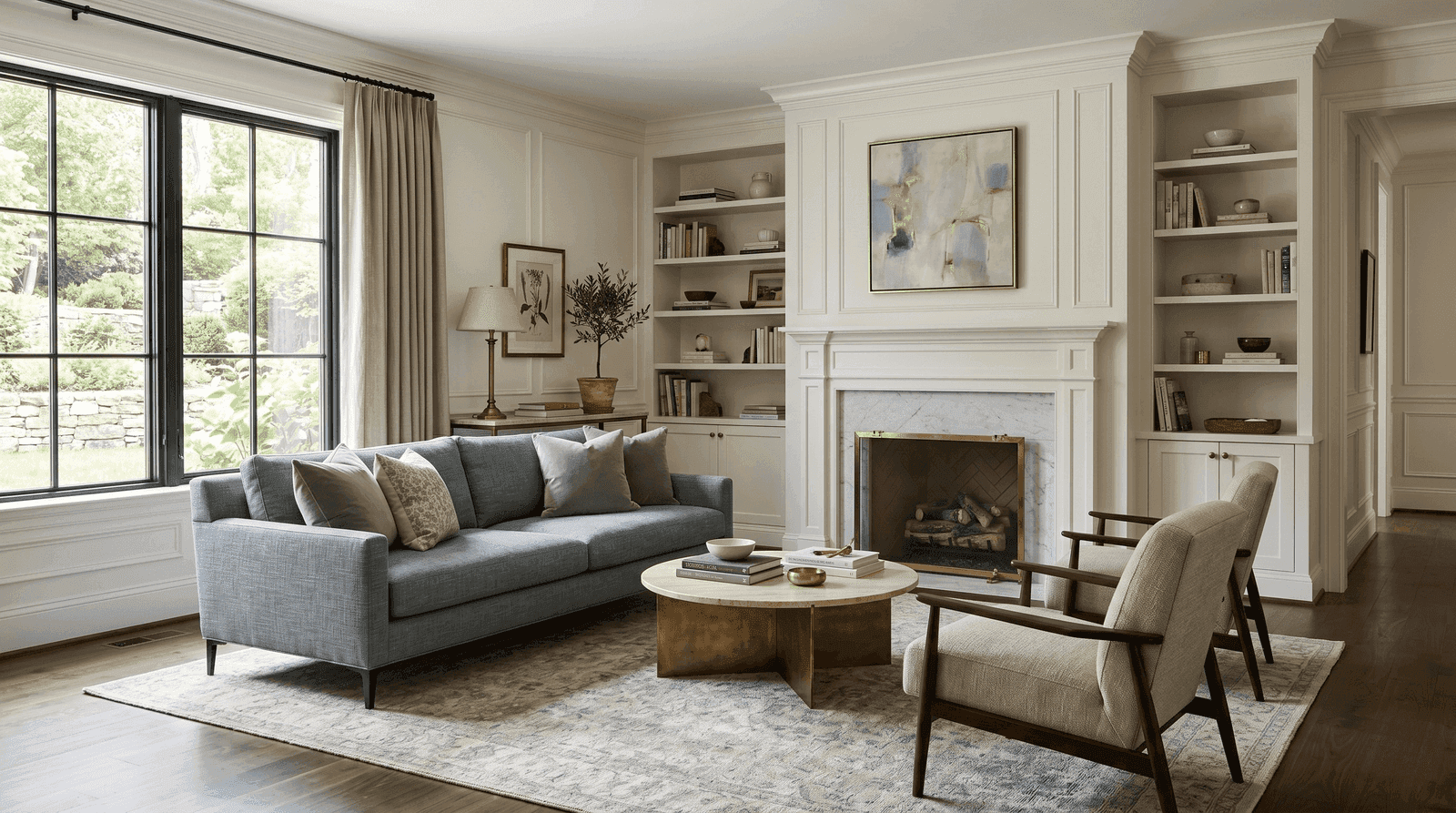
Traditional design has a reputation problem. For a lot of people, it brings up heavy drapes, fussy patterns, fragile furniture, and rooms where you can practically hear someone saying, "Don't sit there." A lovely way to decorate if your main design goal is mild intimidation.
That is not New Traditionalist.
New Traditionalist keeps the best parts of classic design: structure, balance, proportion, tailored silhouettes, and a sense that the room was actually composed. Then it drops the parts that make traditional interiors feel stiff, dark, or overly decorated. The bones are classic. The execution is fresher, lighter, and more current.
New Traditionalist is timeless and tailored, with classic references, cleaner lines, polished materials, and just enough modern contrast to keep the room from feeling stuck in a historic reenactment.
What New Traditionalist is going for
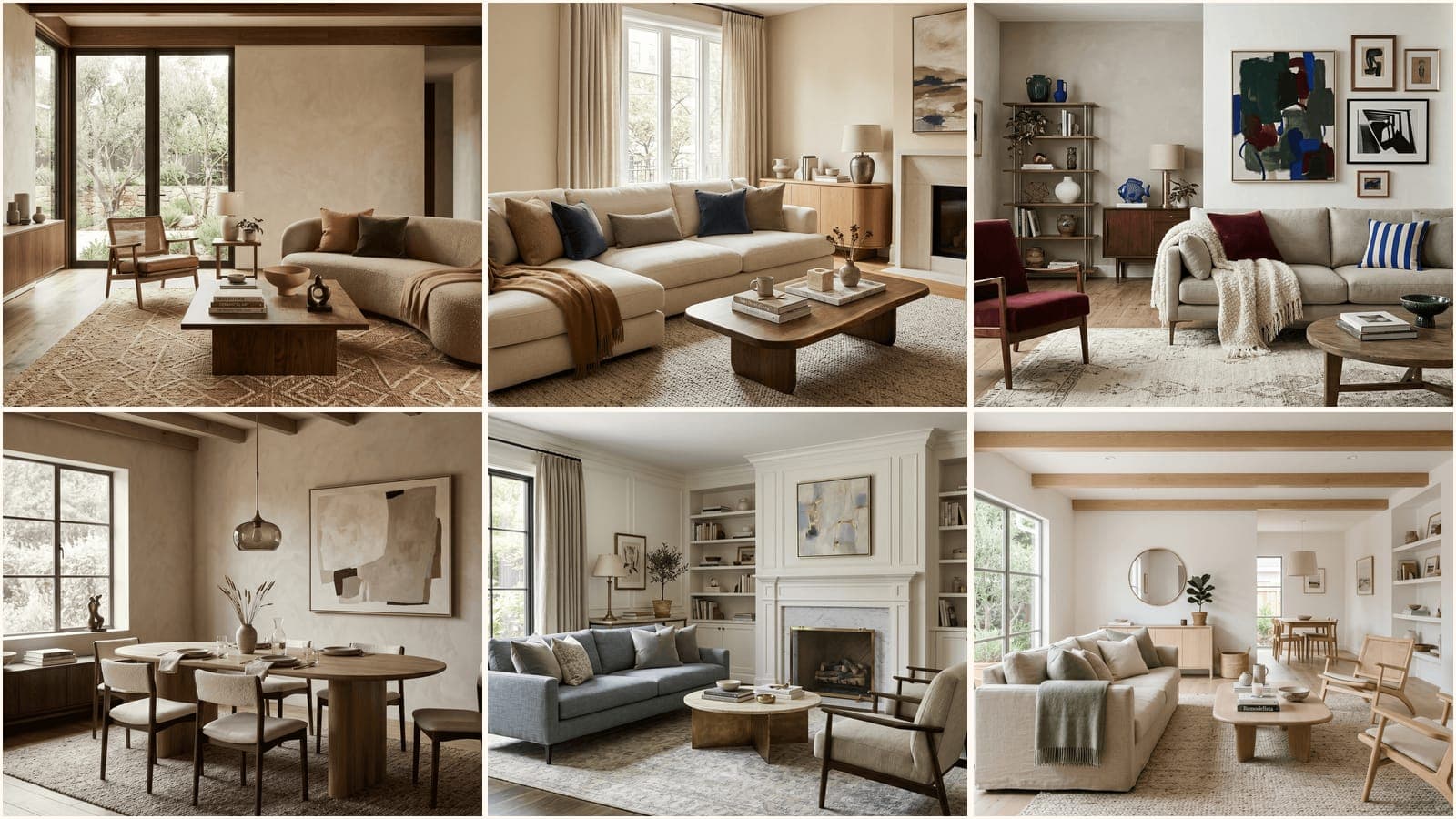
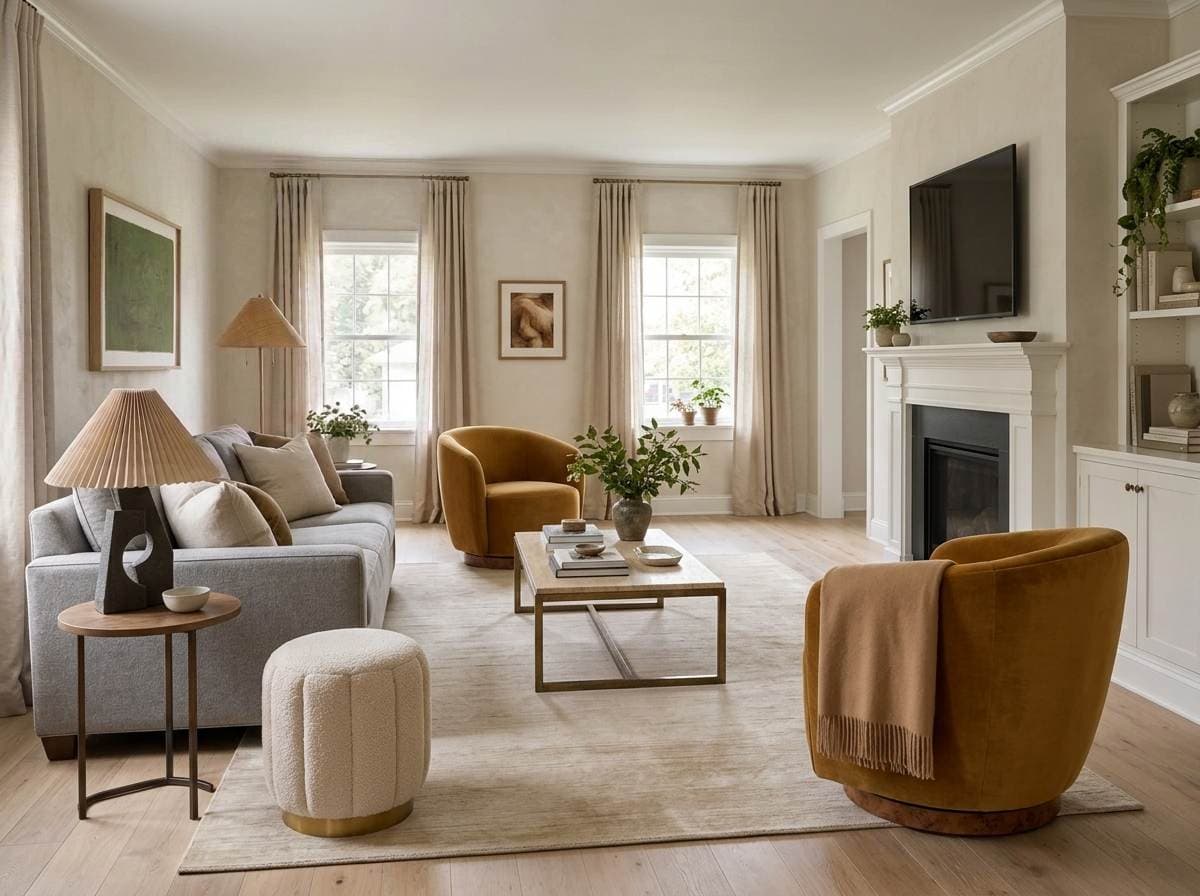
New Traditionalist should feel refined, rooted, and livable. The room can have millwork, symmetry, antique-inspired furniture, pleated shades, polished stone, brass hardware, and a traditional rug, but the overall effect should still feel fresh and easy to live with.
This style is about contrast:
- —Classic architecture with modern art
- —Tailored upholstery with relaxed textiles
- —Traditional silhouettes with cleaner lines
- —Polished stone with warm wood
- —Heritage details with a lighter hand
The goal is not to recreate a period room. The goal is to make classic design feel relevant now. Basically, tradition with better posture and fewer emotional support tassels.
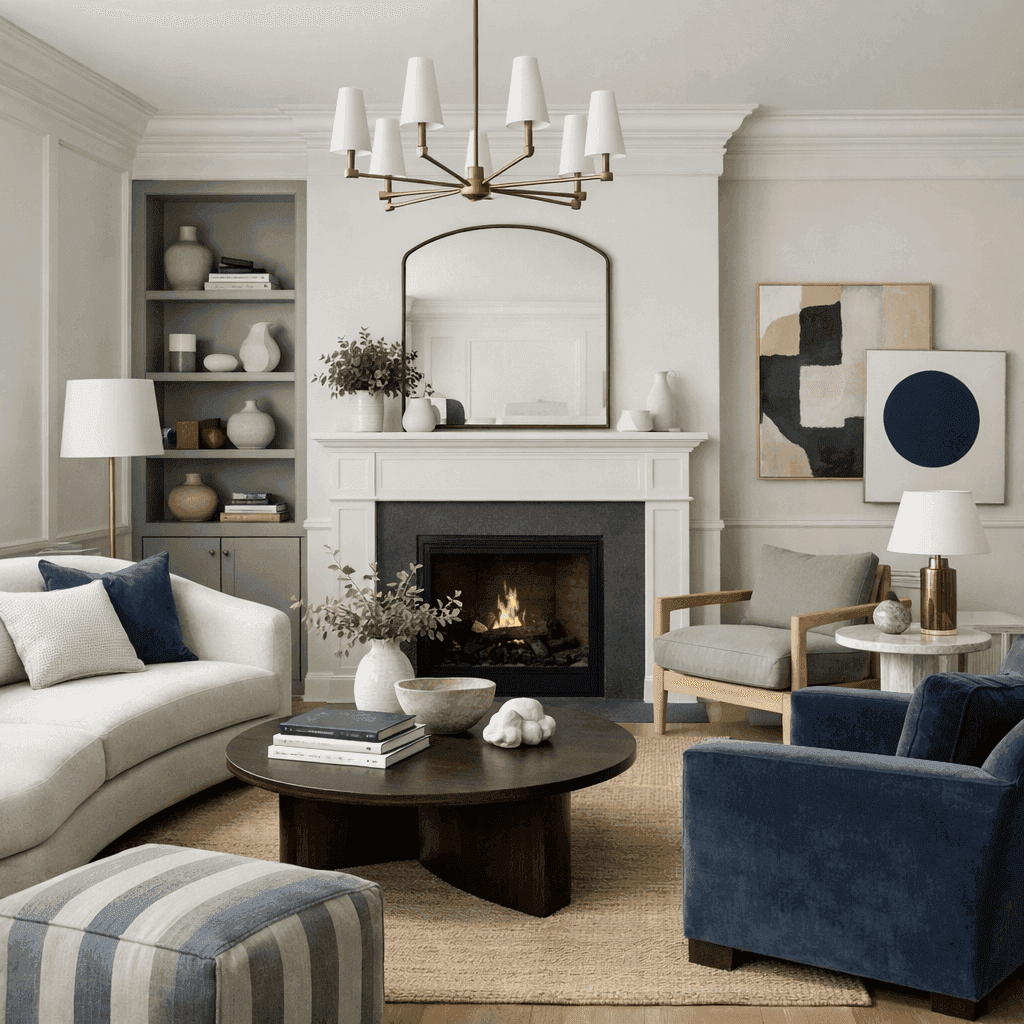
Start with a New Traditionalist palette
New Traditionalist palettes feel soft, composed, and slightly more colorful than minimal or modern styles. The color is there, but it is controlled.
Start with warm, grounded neutrals:
- —Warm white
- —Greige
- —Taupe
- —Mushroom
- —Soft ivory
- —Warm walnut
Then layer in classic muted tones:
- —Dusty blue
- —Sage
- —Muted navy
- —Olive-gray
- —Soft burgundy
- —Stone blue
- —Warm terracotta
Walls can be warm white, soft greige, dusty blue, sage, or a muted neutral with depth. Painted millwork in a slightly different tone is a signature move, it adds architecture and polish without needing the room to wear a costume.
Upholstery should stay grounded: linen, greige, warm ivory, mushroom, or soft taupe. Deeper accents like navy, cognac, sage, or muted burgundy can come through pillows, chairs, rugs, art, or drapery. Metals should feel refined: aged brass, antique brass, soft gold, or polished nickel.
Texture: structured, layered, and refined
New Traditionalist gets depth from classic materials used with restraint.
- —Linen
- —Velvet in muted tones
- —Painted wood
- —Stained wood
- —Polished stone
- —Marble
- —Cane
- —Woven textures
- —Aged brass
- —Pleated fabric
- —Tailored upholstery
The trick is balance. Something structured next to something relaxed. Something classic next to something current. A tailored sofa with a natural fiber rug. A traditional chair with modern art. A polished marble table with linen drapery. A brass lamp beside a clean-lined case piece.
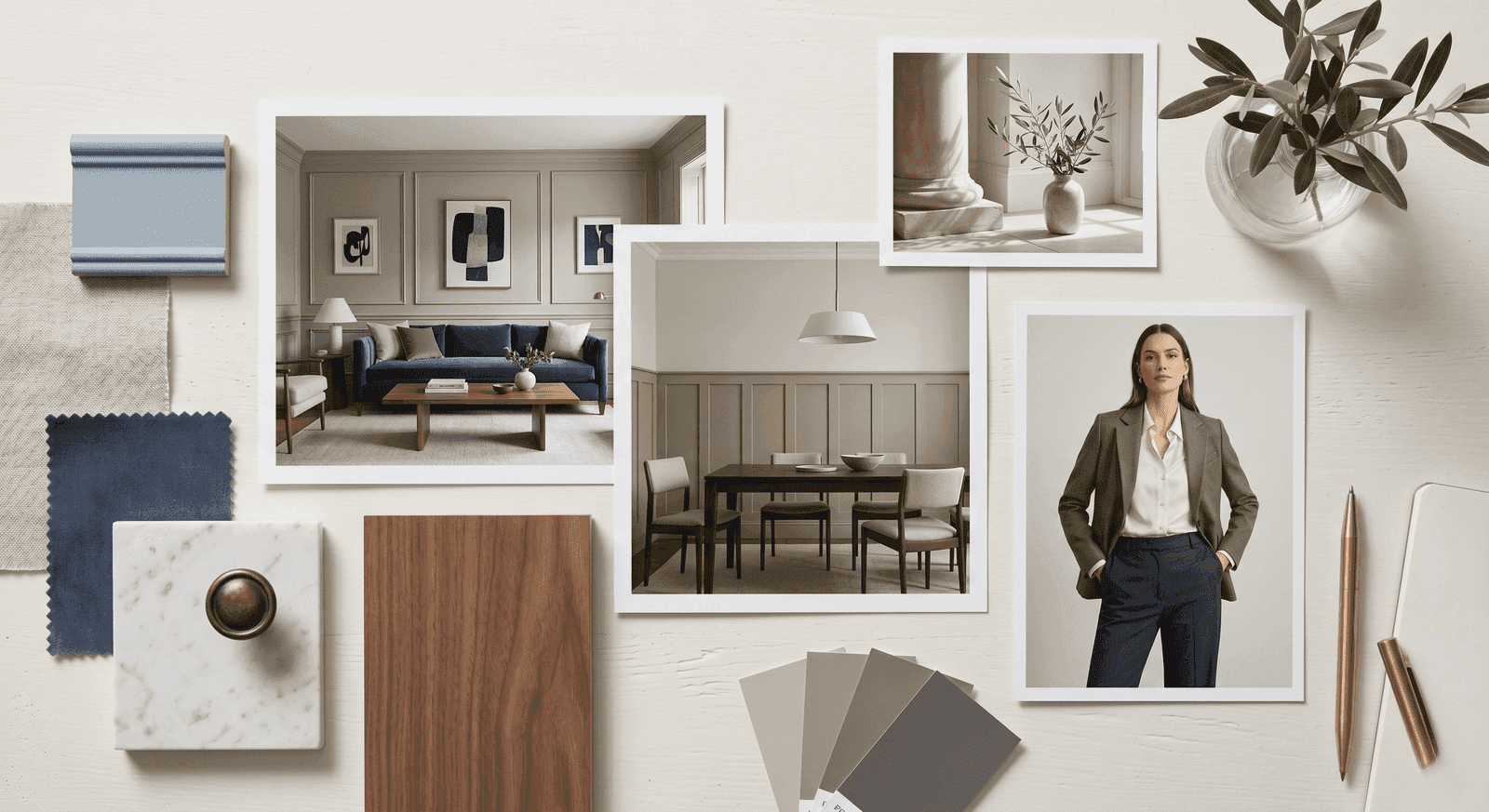
The five pieces that define the room
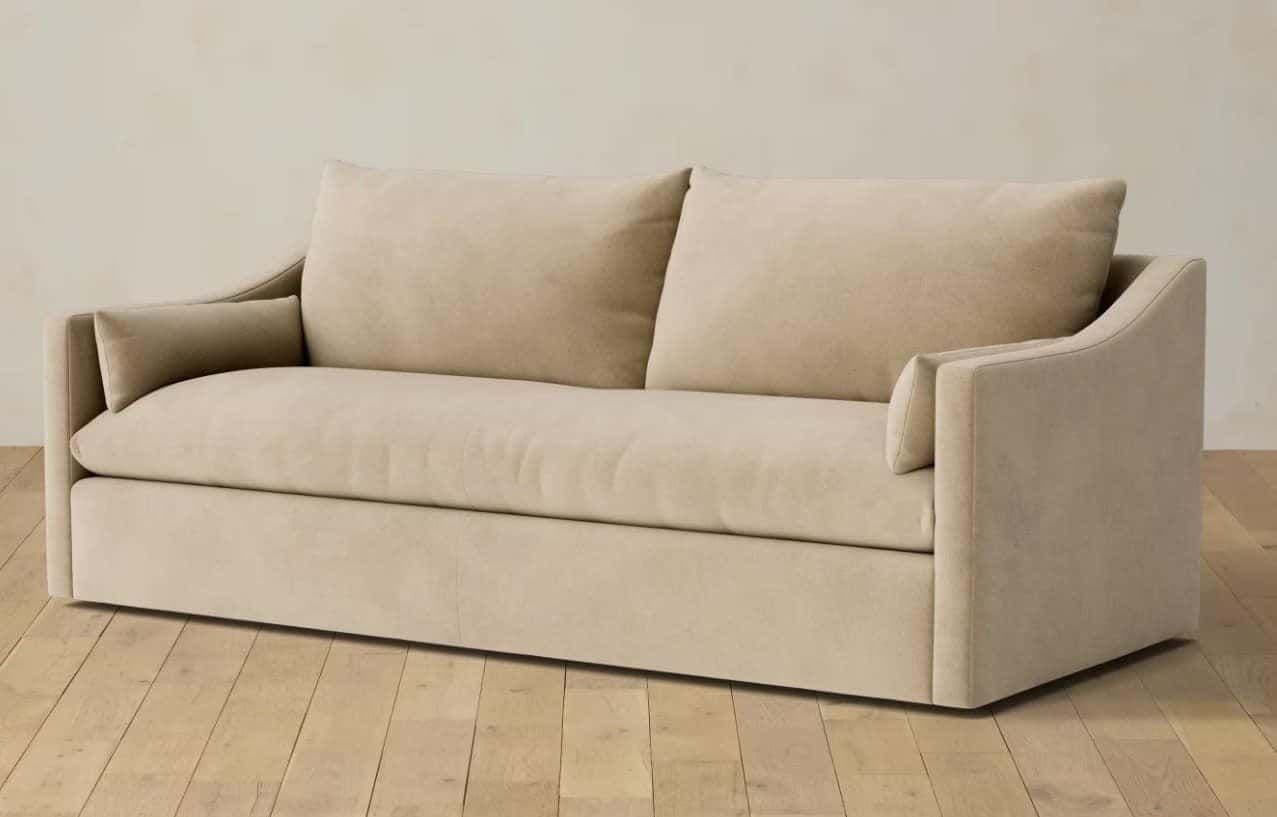
1. The sofa
Choose a classic but edited silhouette. The sofa should feel composed but comfortable, structured enough to anchor the room, relaxed enough that someone can actually live there without sitting like a guest at a law office.
- —Track arm sofa
- —English roll arm sofa
- —Slope arm sofa
- —Tailored skirted sofa
- —Clean-lined bench seat sofa
- —Softly structured sectional
Best fabrics: linen, performance linen, textured cotton, or a neutral woven fabric. Stick to warm neutrals like ivory, greige, mushroom, camel, taupe, or soft beige.
2. The rug
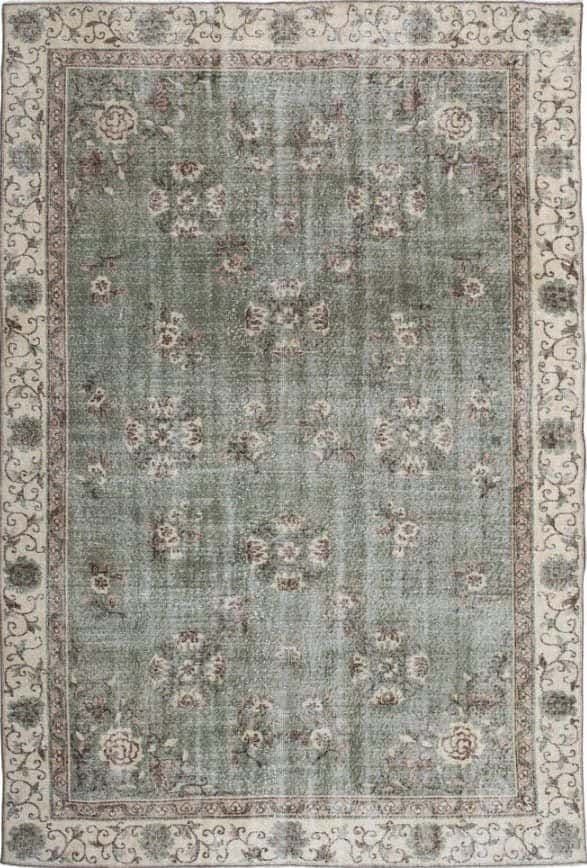
Pattern is welcome here. A traditional, transitional, Persian-inspired, geometric, or softly abstract rug can work beautifully in a New Traditionalist room. The key is keeping the palette muted and letting the rug support the room instead of overpowering it.
- —Faded Persian-inspired patterns
- —Muted wool rugs
- —Traditional motifs in softer colors
- —Blue, sage, rust, or taupe accents
- —Subtle geometric patterns
- —Warm neutral grounds
3. The accent chair
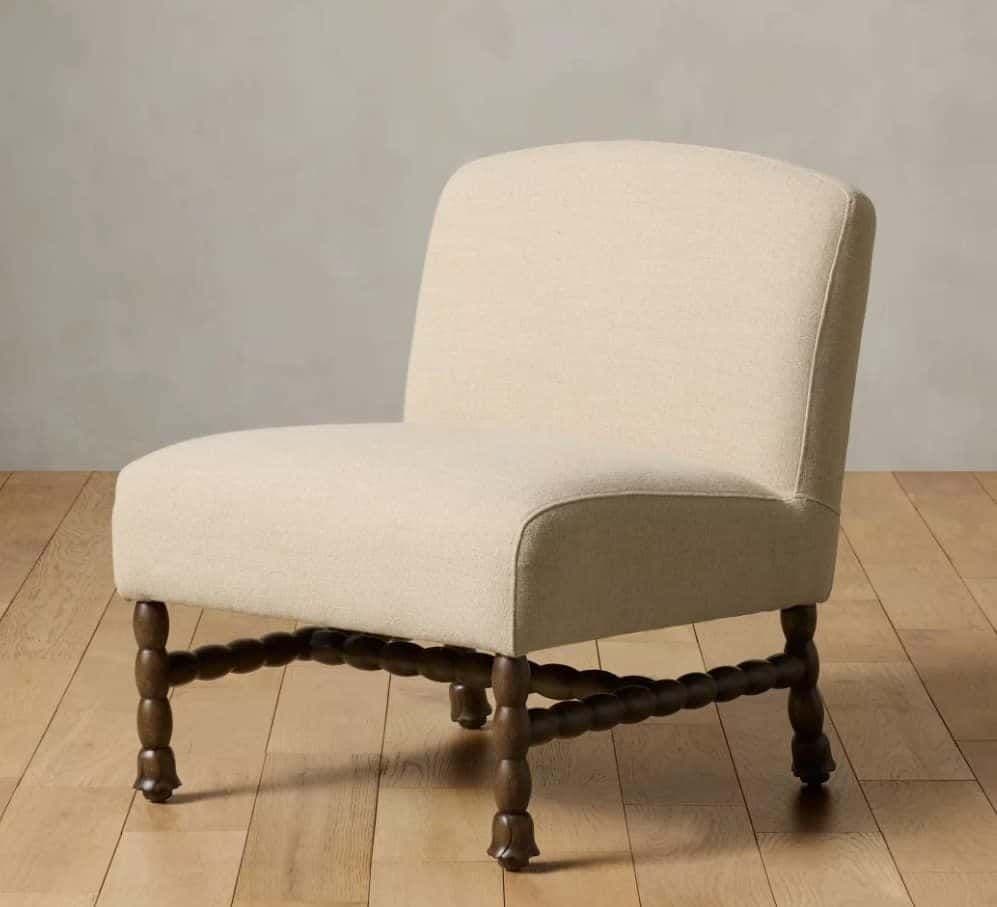
This is where the traditional reference can show up with more personality. The chair can be more expressive than the sofa. Try a subtle stripe, small-scale pattern, muted velvet, cane detail, or a more sculptural frame.
- —Spindle chair
- —Wingback chair
- —Slipper chair
- —Cane chair
- —Bergère-inspired chair
4. The lighting
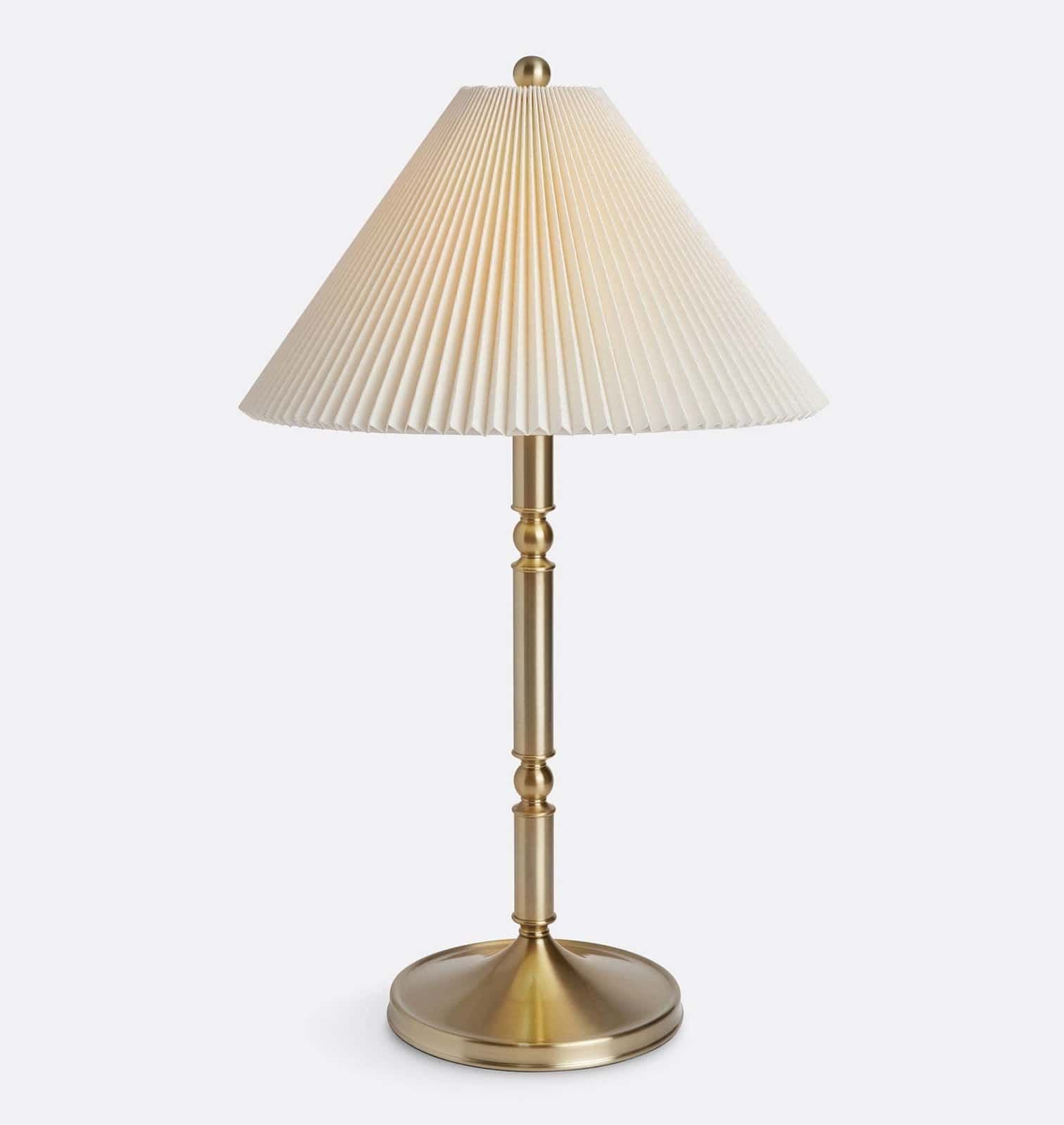
Lighting should feel classic but not fussy. Aged brass is usually your safest friend here, not blinding gold, not bargain-bin yellow. Warm, softened, and refined.
- —Aged brass table lamps
- —Ceramic lamps with tailored shades
- —Pleated shades
- —Chandeliers with clean curves
- —Simple sconces
- —Polished nickel details
5. The architectural detail
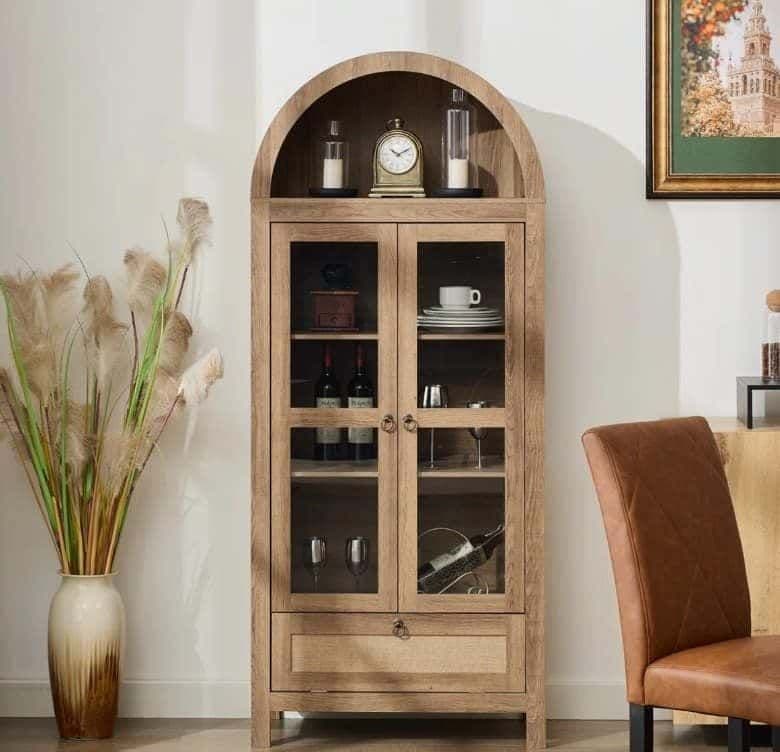
New Traditionalist loves good bones: millwork, panel molding, crown molding, built-ins, wainscoting, a fireplace surround. If your space doesn't have architectural detail, you can create the feeling through a tall bookcase, a framed art arrangement, a substantial mirror, a tailored console, or drapery hung high and wide. You do not need a historic home. You need proportion, structure, and restraint.
The modern contrast matters
Without a current contrast, New Traditionalist can slip into old-fashioned fast. The "new" part matters. Bring in freshness through:
- —Modern art
- —Cleaner-lined upholstery
- —Simplified window treatments
- —Fewer decorative objects
- —Updated lighting shapes
- —Restrained pattern mixing
- —A fresher wall color
- —Sculptural ceramics
- —Contemporary side tables
A traditional room with modern art immediately feels more current. A classic sofa with a clean-lined coffee table feels fresher. A vintage-inspired rug with simple drapery feels livable. The contrast is what keeps the room from feeling frozen in time.
Common mistakes
Going too formal
If the room looks like it belongs in a period film, something went wrong. New Traditionalist should feel polished, not precious. Use classic references, but keep the styling relaxed enough for real life.
Mixing too many patterns
Pattern belongs here, but too much of it gets complicated quickly. A good starting point: one patterned rug, one subtle accent fabric, then mostly solids and textures. Let the room breathe.
Ignoring the art
Art is one of the easiest ways to make traditional design feel current. A large abstract piece, modern photography, or a simple contemporary print can completely shift the tone of the room.
Heavy window treatments
Skip heavy, formal drapery. Use linen, cotton, or a soft tailored fabric. Hang panels high and wide. Keep the lines simple. Let light in.
Overdecorating surfaces
New Traditionalist needs styling, but not clutter. Books, lamps, florals, trays, framed art, and ceramics all work. Just edit. A console table should not look like it is hosting a tiny antique fair.
Where to start
- Choose a soft wall color with depth: warm white, greige, dusty blue, sage, or mushroom.
- Highlight trim or millwork with a slightly contrasting paint tone.
- Add one traditional silhouette: a spindle chair, skirted chair, English roll arm sofa, or cane accent piece.
- Bring in aged brass or polished nickel lighting.
- Layer in a muted patterned rug under quieter upholstery.
- Hang one piece of modern art to create contrast.
- Replace heavy window treatments with simple linen or tailored drapery.
Want to see it before you commit to an English roll arm sofa? Upload a photo of your space to Room Edit and ask for a New Traditionalist update that keeps your architecture and layout but changes the upholstery, lighting and art. Not sure this is your style at all? The Blueprint Style Quiz will point you in the right direction.
New Traditionalist is not about making a room look old. It is about using classic structure with a cleaner, more current hand. Tailored, timeless, and livable, without all the decorative baggage trying to move in rent-free.
.png&w=1920&q=75&dpl=dpl_HsFNKev5vESE4Fpfsy7iSSi9PpFZ)