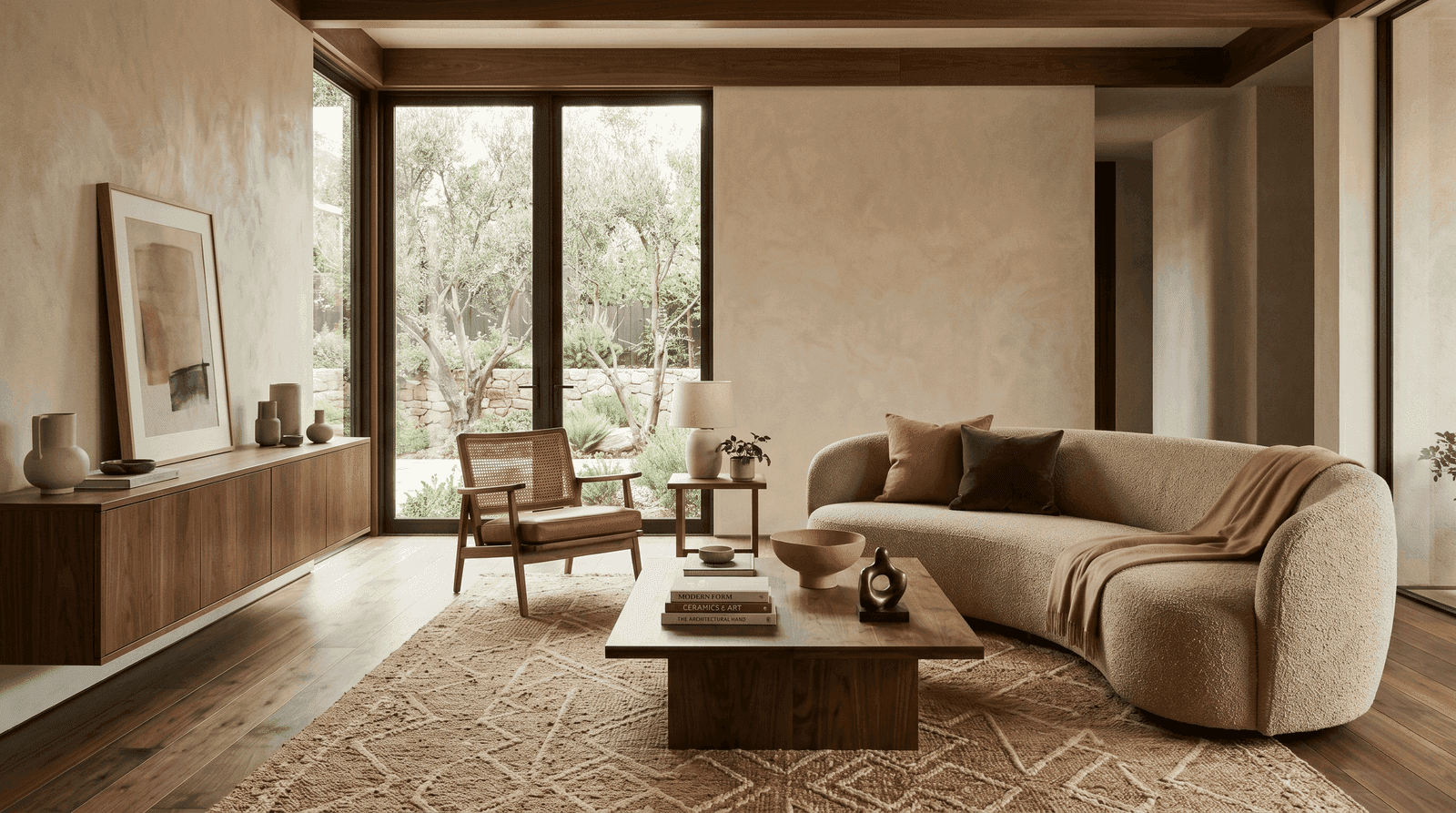
You know those sleek modern rooms online where everything is minimal, matching, and suspiciously untouched by human life? They look beautiful. They also look like no one has ever sat down, owned a dog, opened mail, or eaten a snack. That is modern done without warmth.
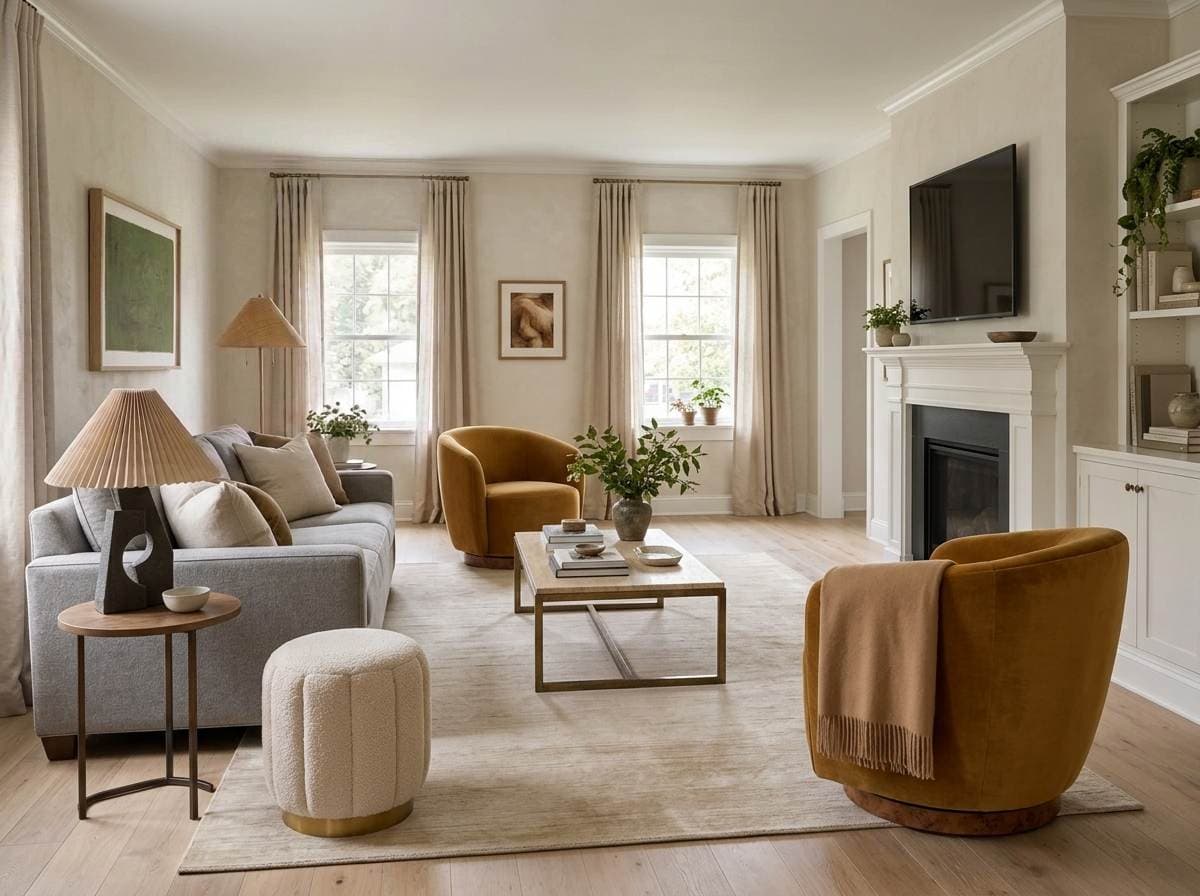
Warm Modernist is modern design with a pulse. It keeps the clean lines, edited layout, and calm visual structure of modernism, but softens everything with natural materials, earthy tones, sculptural forms, and texture that makes the room feel lived-in instead of sterile.
Warm Modernist is clean-lined and edited, but grounded, tactile, and actually pleasant to be around.
What Warm Modernist is going for
The goal is not a showroom. It is a room that feels intentional, calm, and quietly expressive. Warm Modernist spaces work because they are edited, but not empty. The room has fewer pieces, but each one carries more weight.
Think:
- —A low, clean-lined sofa
- —A substantial wood or stone coffee table
- —A rug large enough to anchor the seating area
- —Sculptural lamps instead of relying only on overhead lighting
- —One large piece of art with breathing room
- —Warm wood, plaster, stone, ceramics, and natural fibers
The result should feel architectural, grounded, and calm, but still human. Basically, modernism that remembered people have bodies.
Start with a Warm Modernist palette
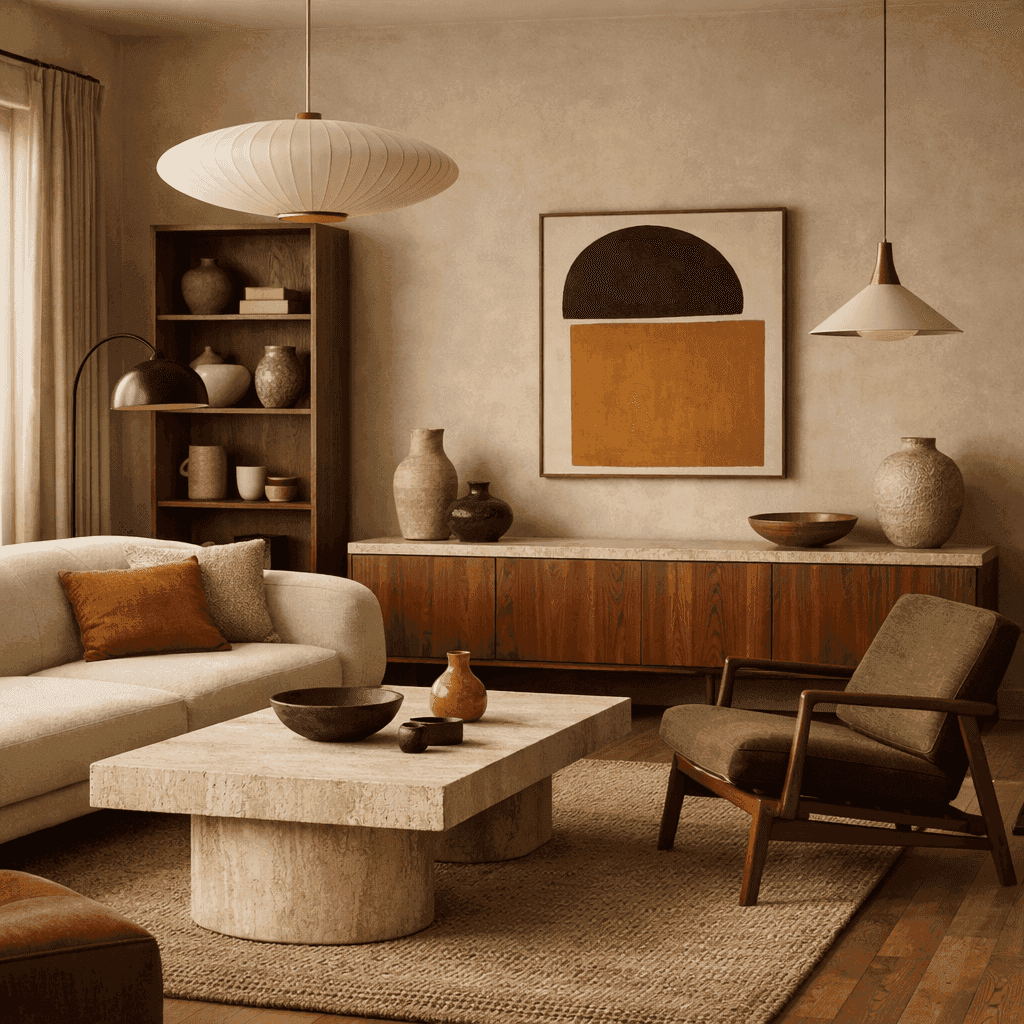
Warm Modernist depends on a tight, earthy palette. The colors should feel muted, warm, and grounded, not bright, icy, or overly decorative.
- —Oatmeal
- —Camel
- —Clay
- —Ochre
- —Olive
- —Warm beige
- —Walnut
- —Stone
- —Warm black
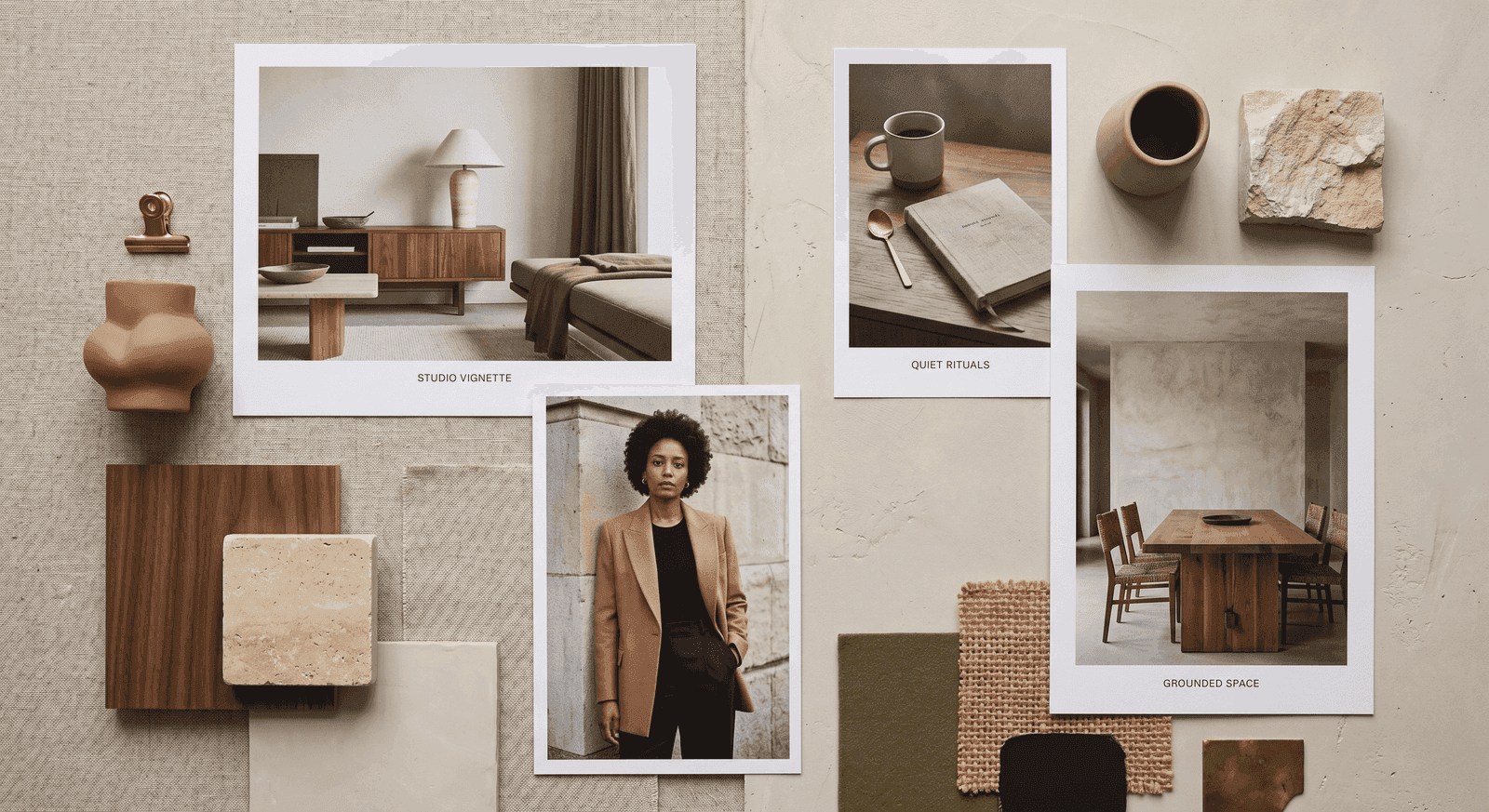
Walls should usually stay warm and quiet: warm white, soft greige, putty, or a subtle plaster-like finish. Wood is essential here: walnut, white oak, medium oak, or warm-toned wood keeps the room from feeling cold. Upholstery should stay grounded and tactile: oatmeal, camel, warm tan, cognac, stone, mushroom, or soft ivory.
Use black sparingly: a lamp base, frame, hardware detail, chair leg, or sculptural accent is enough. Optional color can come through muted accents like clay, rust, dusty olive, ochre, or deep navy. Keep it restrained.
Texture is everything
Warm Modernist rooms do not rely on lots of pattern or bright color. They get richness from texture, material, and silhouette. If the room feels flat, the problem is probably not that you need more decor, it is probably that too many surfaces feel the same.
- —Bouclé
- —Wool
- —Heavy linen
- —Leather or soft matte faux leather
- —Visible wood grain
- —Travertine
- —Honed stone
- —Matte ceramic
- —Plaster or limewash
- —Woven natural fibers
- —Blackened metal
- —Aged brass
The key is contrast. If your sofa is smooth, your rug should have texture. If your coffee table is stone, add something softer nearby. If your walls are flat, bring in wood grain, woven materials, or ceramics.
The five pieces that make or break the room
1. The sofa
Choose a sofa with a clean, low, substantial silhouette. It should feel modern and tailored, but not stiff. Avoid overstuffed arms, heavy tufting, or rolled arms. The sofa should feel simple, but not boring. Quiet, but not forgettable.
- —Bouclé
- —Linen
- —Wool blend
- —Textured performance fabric
- —Warm leather
- —Soft neutral woven fabric
2. The rug
The rug should be large enough to connect the furniture and make the seating area feel intentional. At minimum, the front legs of the sofa and chairs should sit on the rug. Look for something with texture and grounding, not something too small, too thin, or too busy.
- —Wool
- —Flatweave
- —Low-pile texture
- —Tonal pattern
- —Subtle geometric detail
- —Warm neutral color
3. The coffee table
The coffee table should feel substantial. This is a great place for material presence: wood, stone, travertine, concrete, smoked glass, or a sculptural form with weight. Style it simply: one ceramic vessel, one tray, a stack of books, or a sculptural object.
- —Chunky wood table
- —Travertine or stone coffee table
- —Plinth table
- —Sculptural organic shape
- —Clean-lined table with strong proportions
4. The lighting
Overhead lighting alone will flatten the room and make everything feel harsher than it should. Use lamps, warm bulbs, and sculptural fixtures that feel like part of the design. Aim for warm bulbs around 2700K and dimmers where possible.
- —Table lamps
- —Floor lamps
- —Sculptural pendants
- —Ceramic lamp bases
- —Aged brass or blackened metal finishes
5. The art
Warm Modernist rooms usually look better with fewer, larger pieces of art. One oversized piece with breathing room often works better than a scattered gallery wall of small prints. Scale matters. If the art feels too small, size up more than feels comfortable.
- —Tonal abstract art
- —Modernist-inspired prints
- —Black-and-white photography
- —Organic forms
- —Minimal landscapes
- —Textured canvas
- —Simple linework
Common mistakes
Too much stuff
Warm Modernist is an editing style. If every surface has decor on it, the room loses its calm. Use fewer, better objects. Let materials and forms do more of the work.
Cold whites
Bright, icy white walls can make the whole room feel sterile. Choose warm whites, soft greiges, putty tones, or plaster-like finishes instead.
Everything is undersized
Tiny rugs, tiny art, tiny side tables, tiny lamps, this is how a room starts looking accidental. Warm Modernist relies on scale. Pieces should feel substantial, grounded, and intentional.
All one shade of beige
Neutral does not mean everything is the exact same color. You need contrast. Use warm wood, stone, black accents, textured textiles, and subtle shifts in tone to keep the room from looking unfinished.
Too much retro influence
Midcentury can absolutely show up here, but the room should not feel like a time capsule. Use modernist influence through shape, proportion, wood tone, and materiality, not through a fully themed retro furniture lineup.
Where to start
- Get a rug that actually fits the seating area.
- Add one warm wood piece: a coffee table, console, shelf, or cabinet.
- Bring in one strong texture: bouclé, wool, linen, leather, or woven fiber.
- Add at least two warm light sources, ideally lamps with 2700K bulbs.
- Replace scattered small decor with one larger art piece or sculptural object.
- Add contrast through warm black, stone, ceramics, or aged metal.
- Edit out anything that feels decorative but not intentional.
Want to see your room warmed up before you buy the walnut coffee table? Upload a photo to Room Edit and ask for a Warm Modernist refresh that keeps your layout and flooring. Still deciding between this and another style? The Blueprint Style Quiz will settle it.
Warm Modernist is not about adding more. It is about choosing better, warmer, more grounded pieces and letting them hold the room. Clean lines. Strong materials. Good lighting. Enough texture to make the space feel alive. Modern, but not cold. Minimal, but not empty.
.png&w=1920&q=75&dpl=dpl_HsFNKev5vESE4Fpfsy7iSSi9PpFZ)