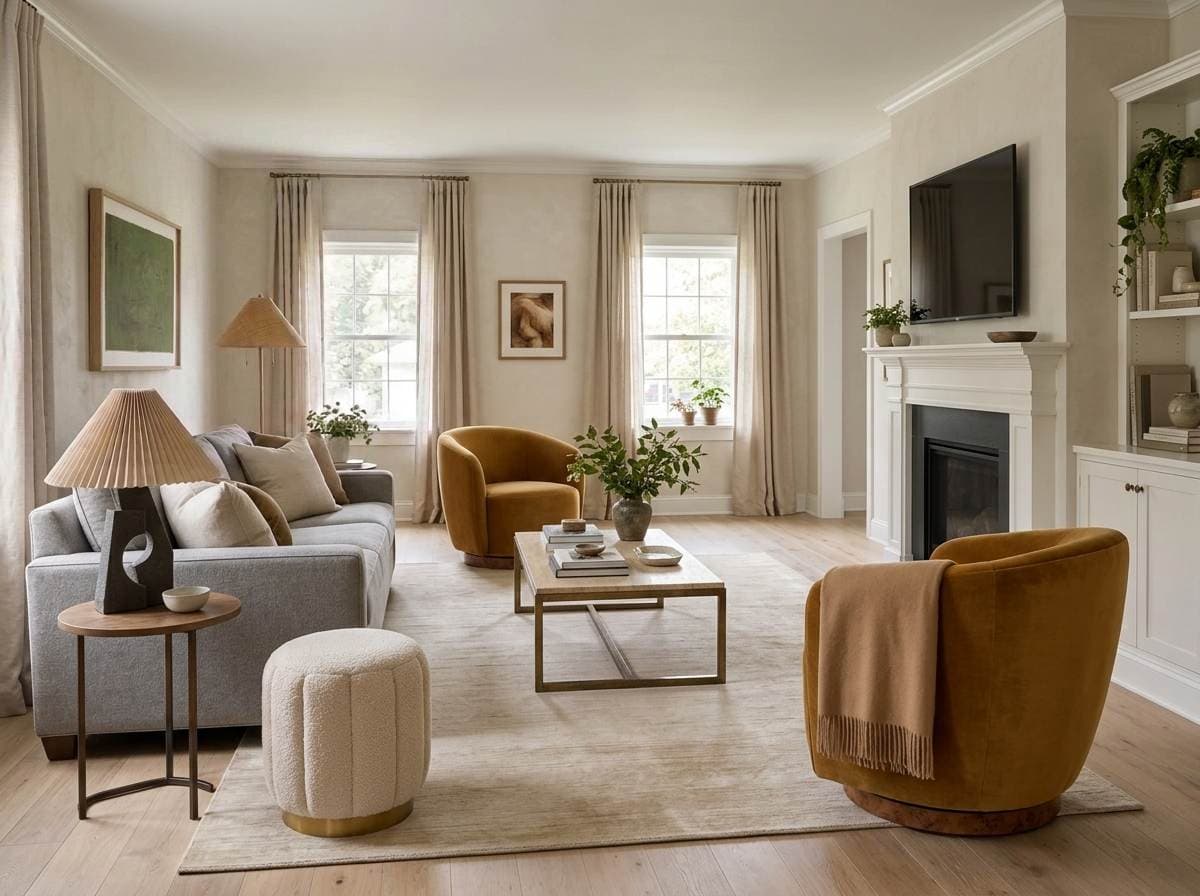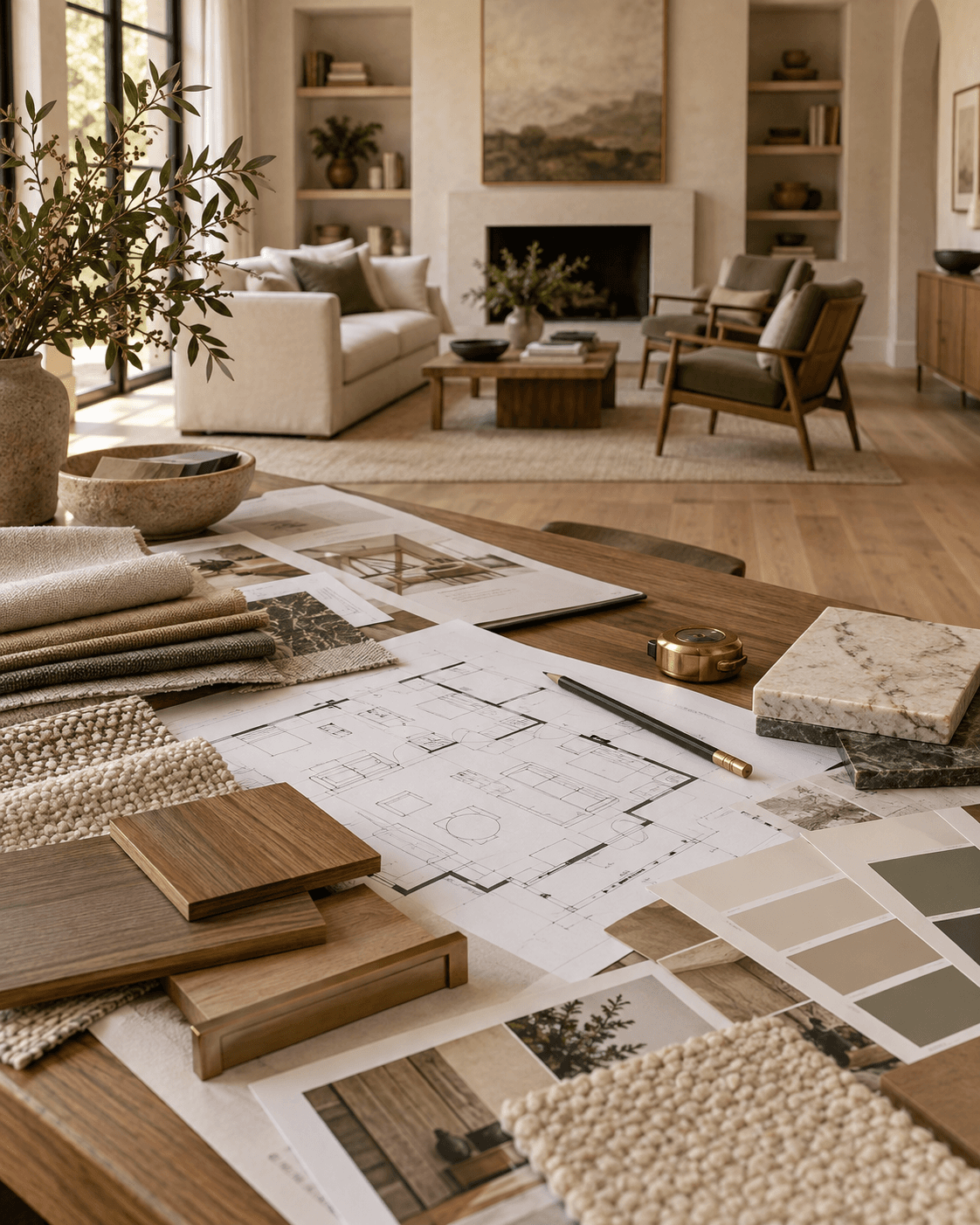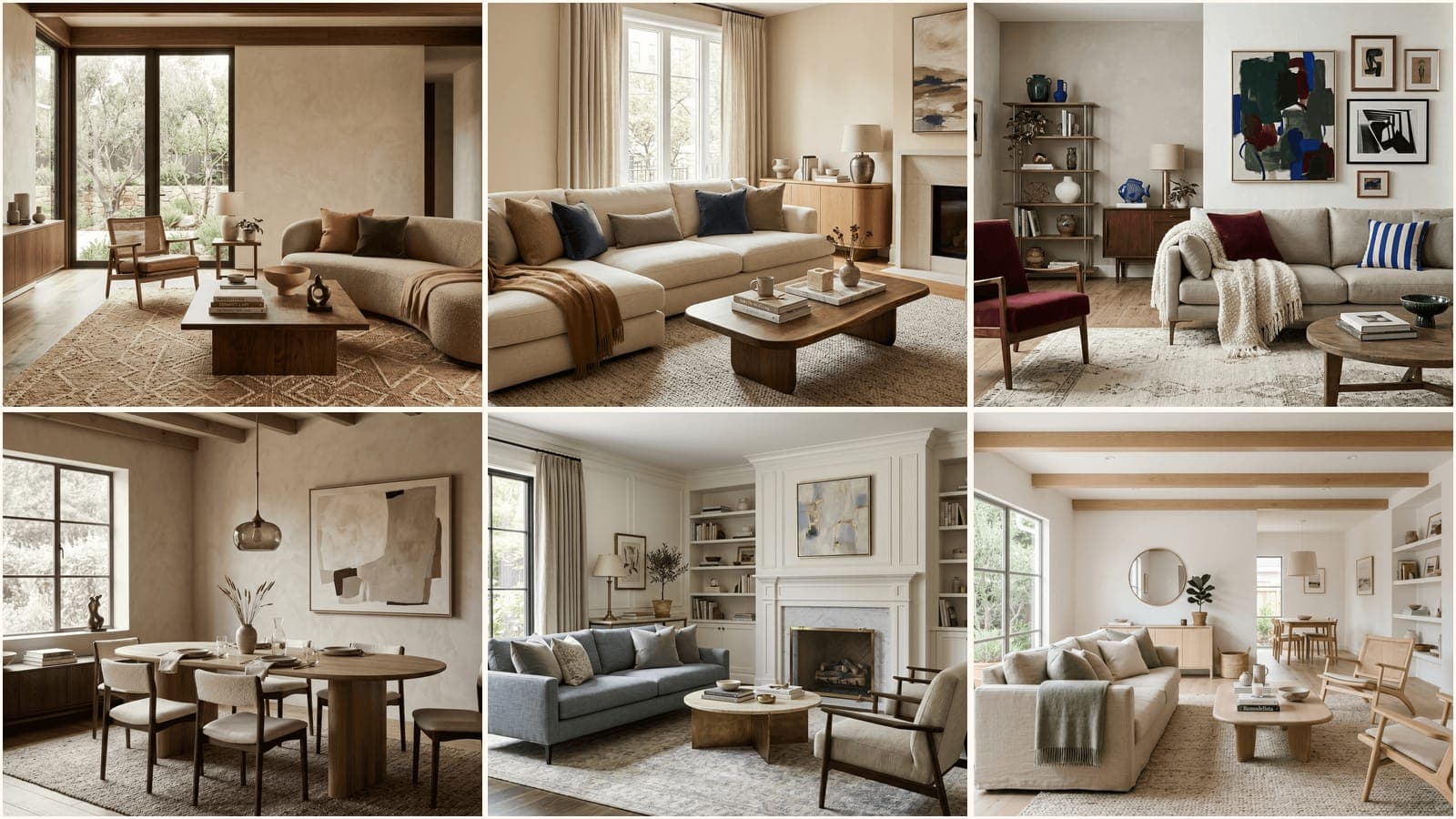
Most people can point to the rooms they love long before they can name the style. You save a living room, then a kitchen, then a bedroom that looks nothing like either, and the board ends up describing three different houses.
Style names help because they give those pictures a shared set of rules: a palette, a few materials, a way the furniture sits in the room. Veyah Studio builds its style guides and the Blueprint Style Quiz on six core styles. Here is what each one is going for.
A style is not a theme. It is a set of decisions you can repeat in every room.
The six interior design styles at a glance
- —Warm Modernist: clean lines softened by walnut, plaster and an earthy palette.
- —Casual Luxe: polished comfort, with plush materials, curved forms and warm neutrals.
- —Collected + Eclectic: old and new layered with intention, held together by a steady palette.
- —Moody Minimalist: tonal, sculptural minimalism with soft shadow and quiet contrast.
- —New Traditionalist: classic structure and proportion, executed with a lighter hand.
- —Scandi-Cali Cool: Scandinavian restraint with California ease, pale wood and natural texture.
Warm Modernist
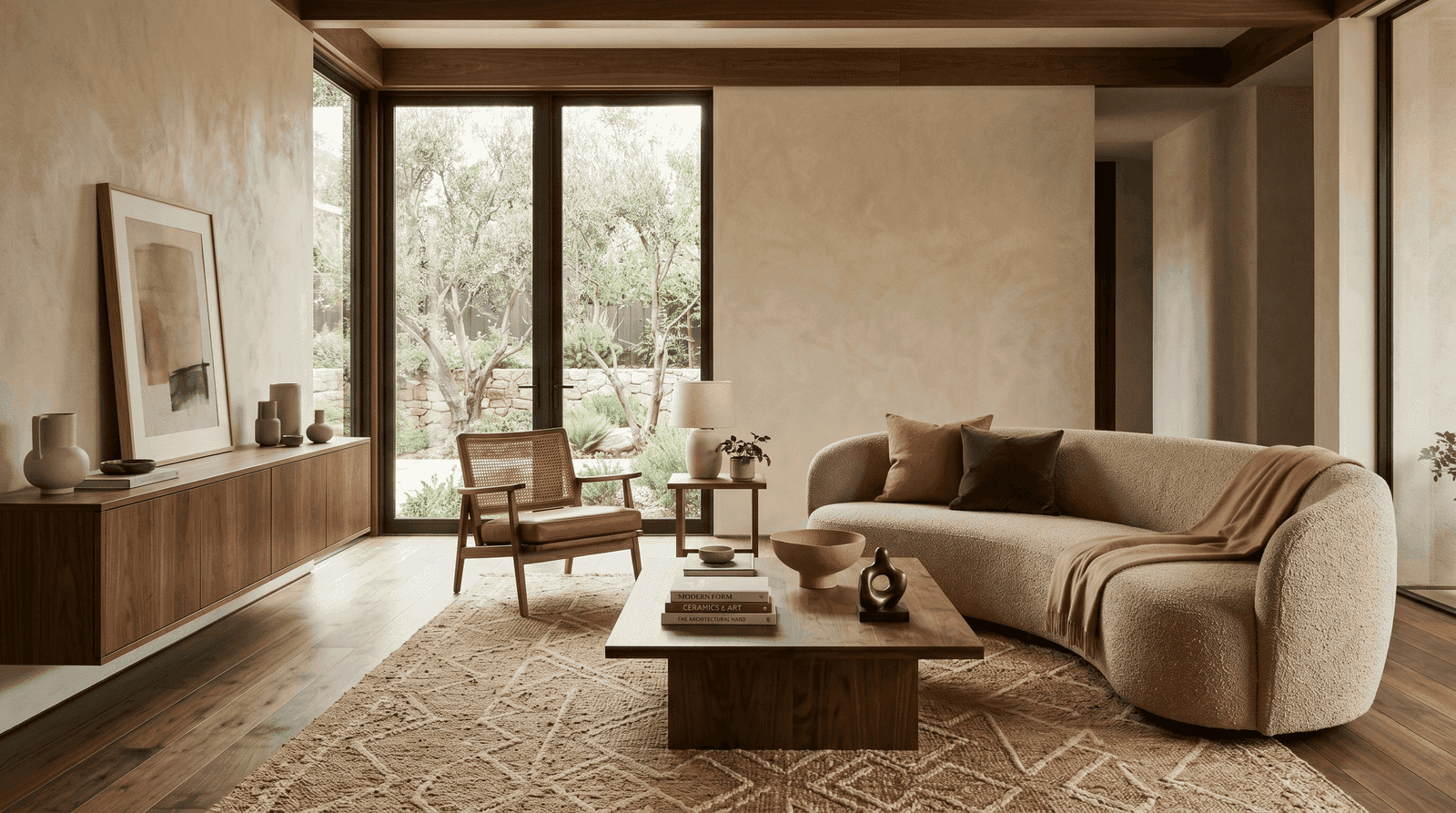
Warm Modernist is modern design with soul. It keeps the clean lines, low profiles and lack of ornament, then swaps the cold finishes for warm ones: walnut and oak instead of chrome and glass, wool and linen instead of anything slick, and a palette of clay, oatmeal, camel, olive and ochre.
It suits you if you like a room that feels edited and calm but still tactile. A travertine coffee table, a walnut sideboard and one sculptural lamp do most of the talking. Read the full Warm Modernist guide.
Casual Luxe
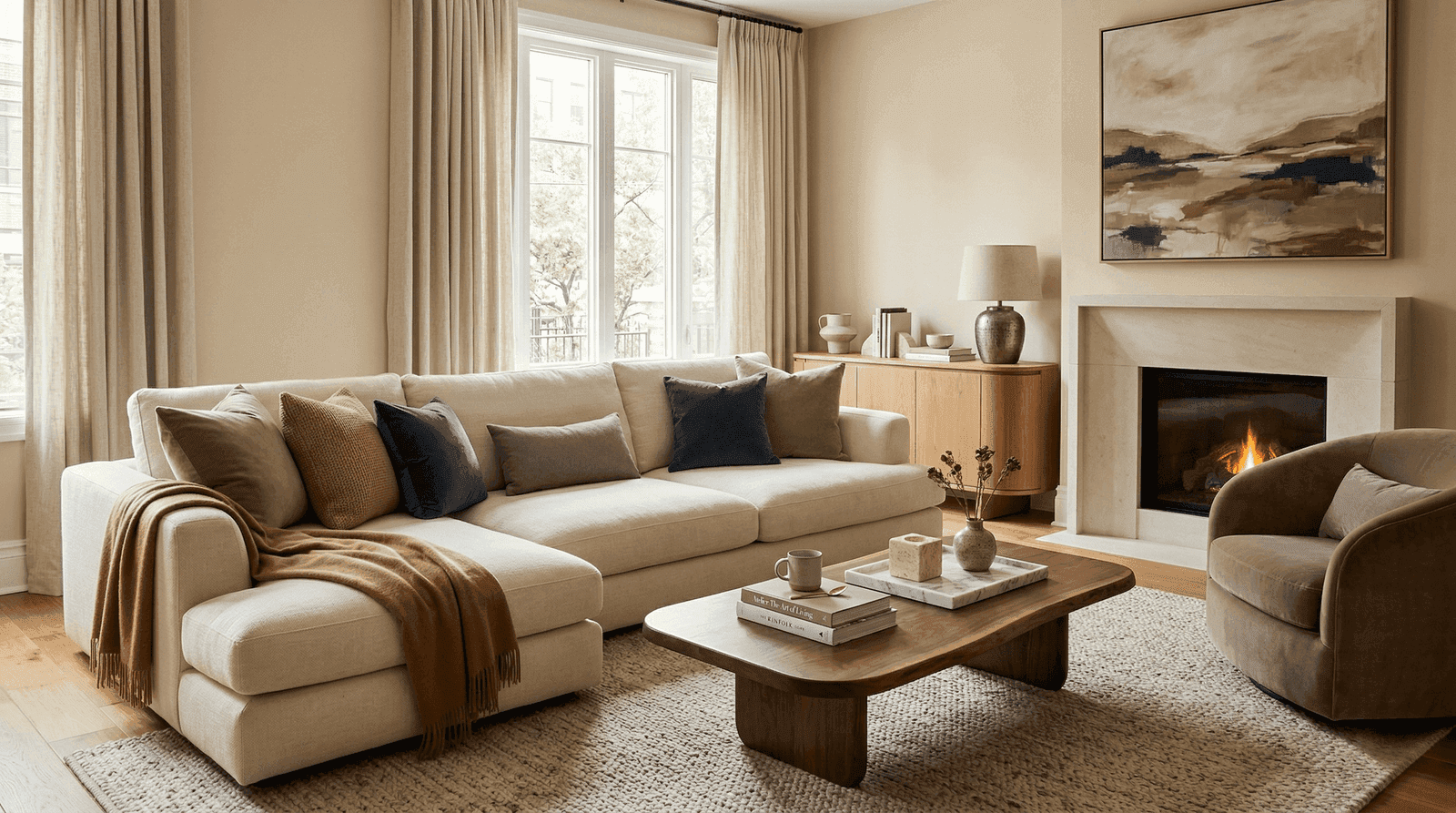
Casual Luxe is polished comfort. It borrows the feel of a good hotel lounge, with plush seating, curved forms, bouclé, velvet and brushed brass, and leaves the stiffness behind. Creams, taupes and warm grays carry the room, with accents of espresso, dusty mauve or deep navy.
It suits you if you want a room that looks expensive and still gets used every night. The test: can you put your feet up on the sofa without anyone flinching? Read the full Casual Luxe guide.
Collected + Eclectic
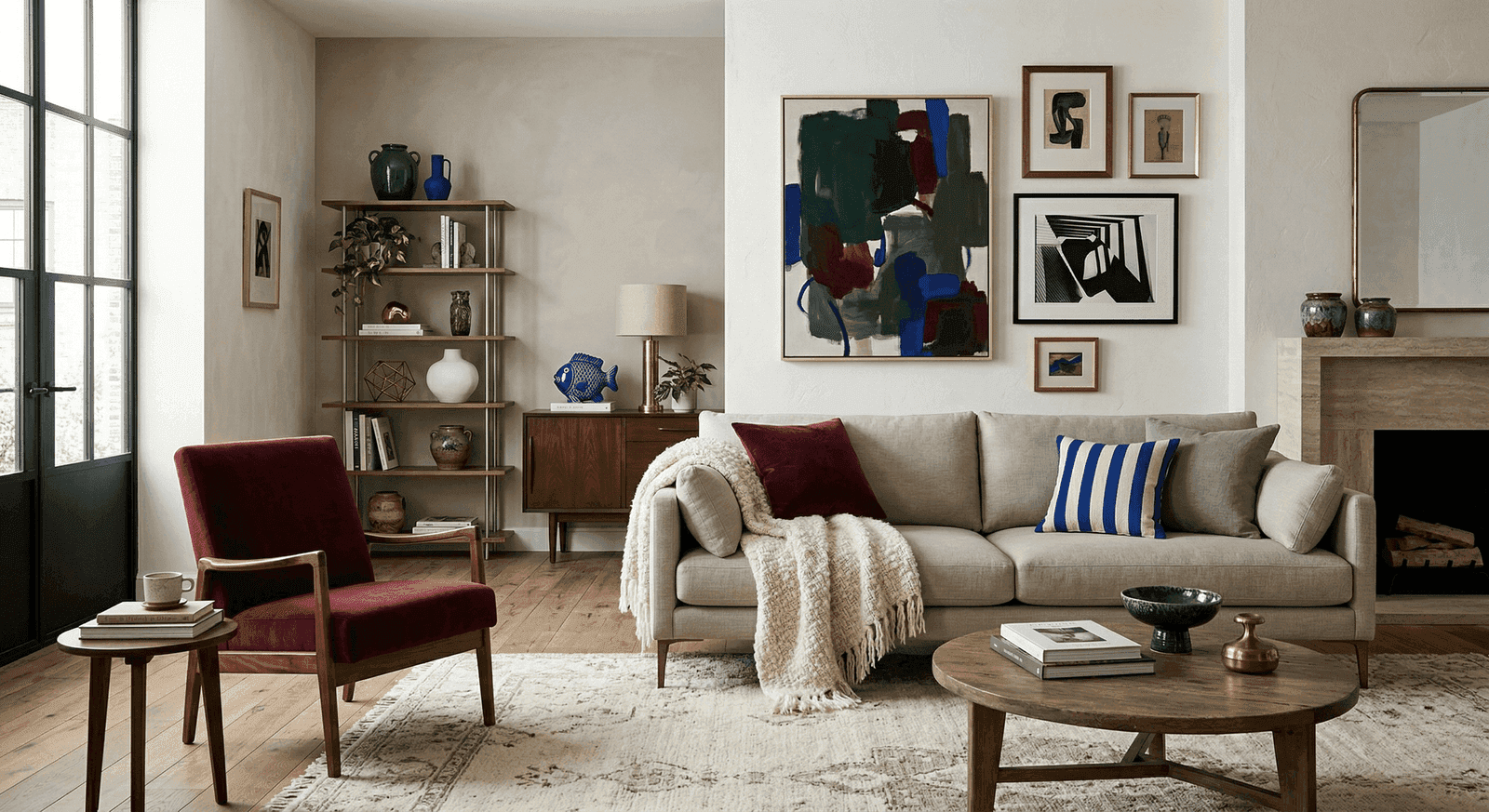
Collected + Eclectic is a room built over time rather than bought as a set. Vintage sits next to modern, worn leather next to stone, and art does a lot of the work. What keeps it from tipping into chaos is the palette: cream, camel, tobacco and soft black as the base, opening into rust, olive, oxblood or cobalt.
It suits you if your favorite things don’t match and you would rather they didn’t. It is not the same as boho, which leans looser and more free-spirited. This style stays edited. Read the full Collected + Eclectic guide.
Moody Minimalist
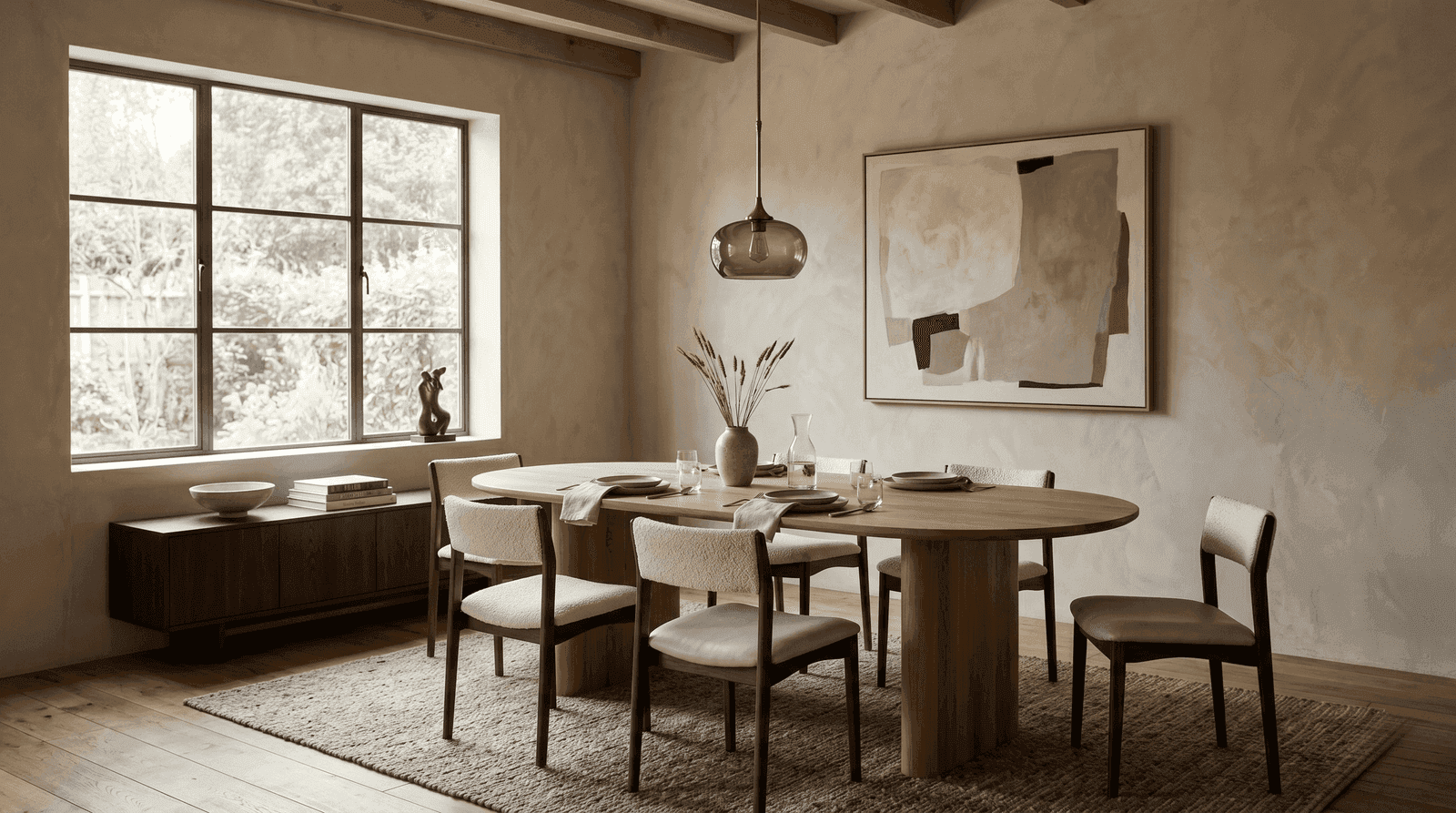
Moody Minimalist is minimalism with warmth and atmosphere. Few pieces, clean lines and quiet surfaces, in a tonal palette of warm off-white, mushroom, putty, clay and soft espresso rather than stark white. Matte plaster, smoked glass, bouclé and aged metal add texture, and darker accents are used sparingly.
It suits you if you want a calm, slightly cinematic room where every object earns its place. It does not mean black walls and a black sofa. Read the full Moody Minimalist guide.
New Traditionalist
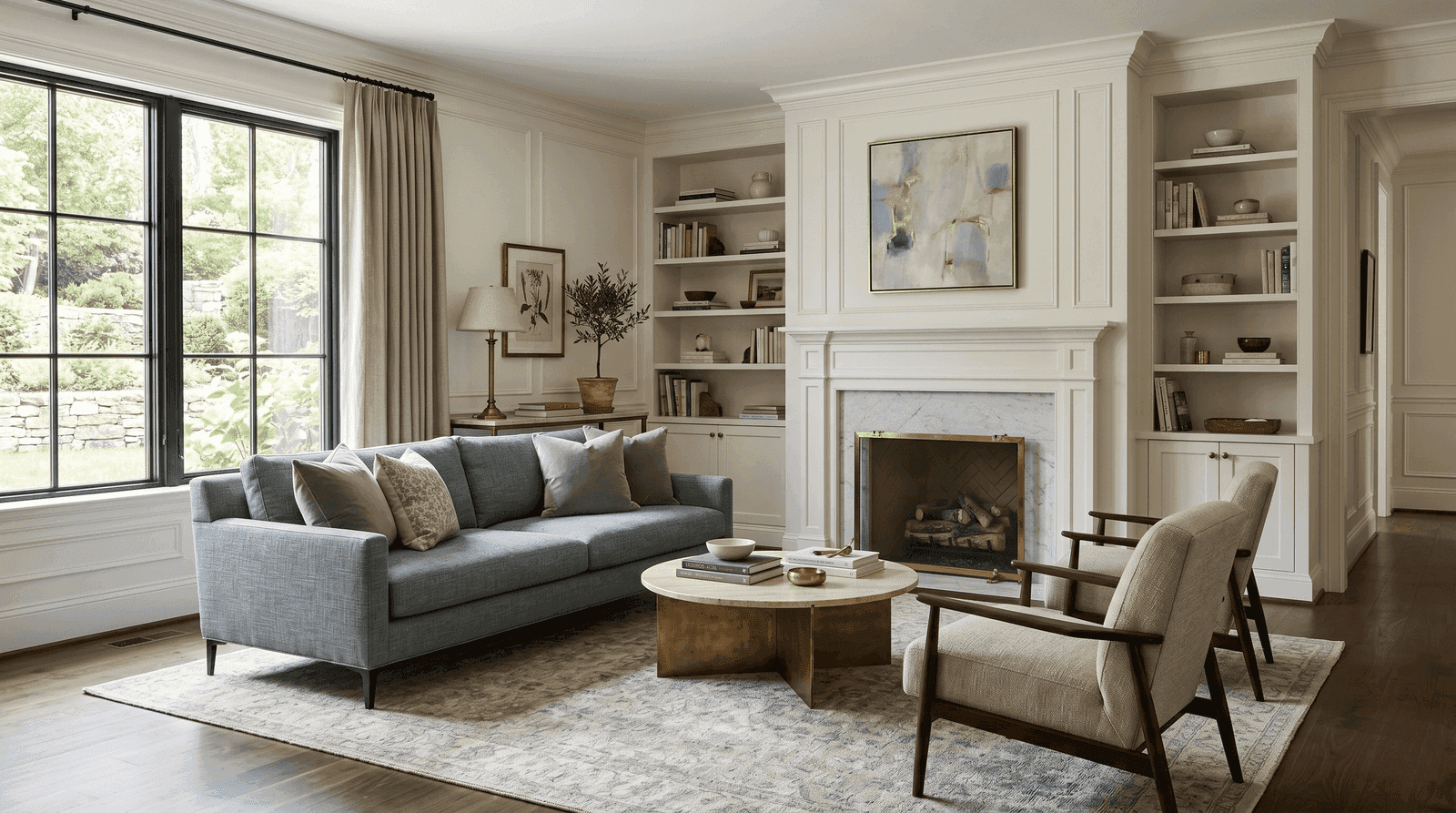
New Traditionalist keeps the structure of classic design: symmetry, proportion, tailored upholstery, millwork, polished stone and brass. Then it lightens the palette to warm whites, greige, sage and muted blue, simplifies the lines and cuts the pattern count.
If you have seen rooms described as transitional, this is close kin: classic structure with a current point of view. It suits you if you love traditional rooms but not the heaviness. Read the full New Traditionalist guide.
Scandi-Cali Cool
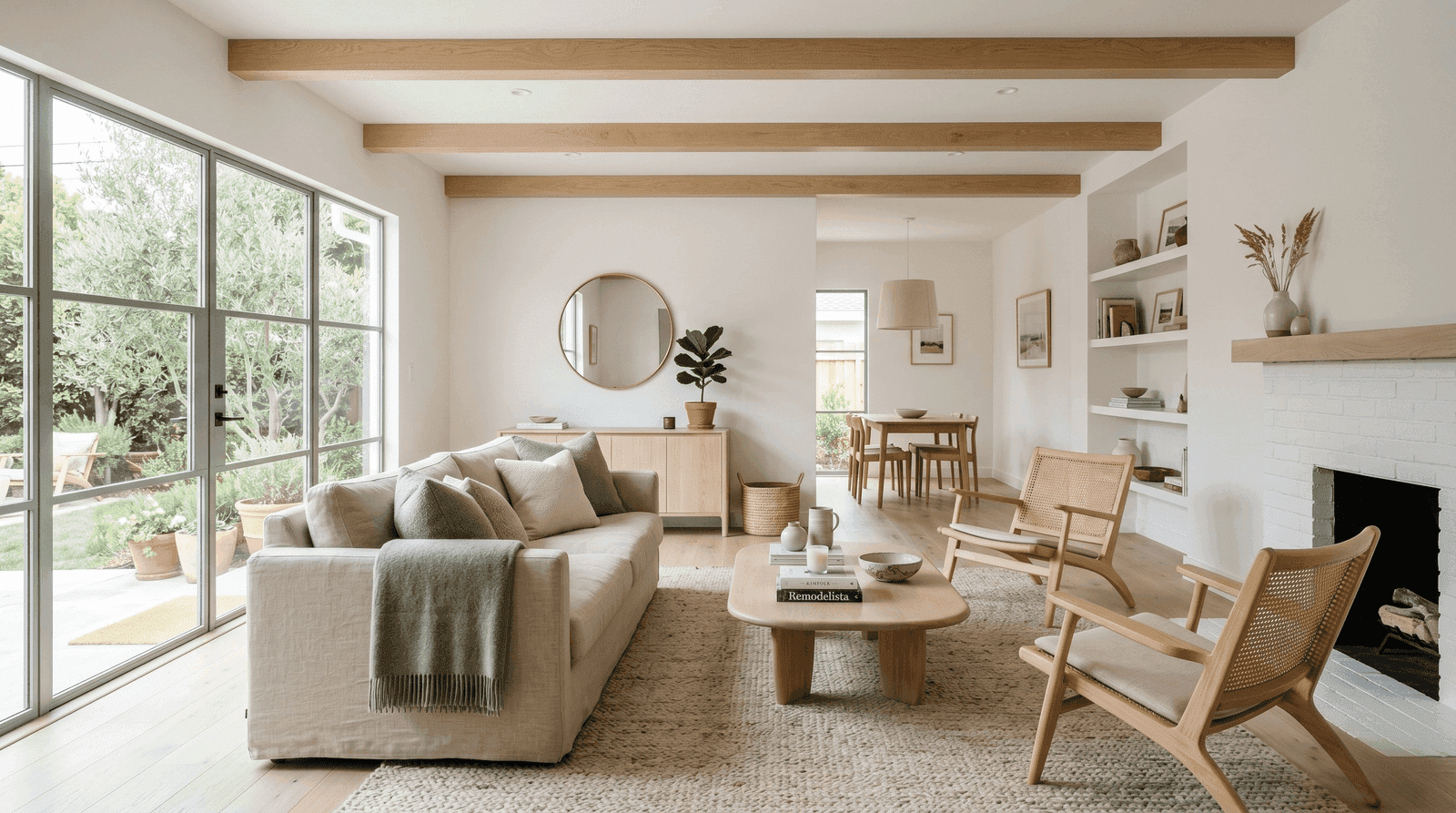
Scandi-Cali Cool blends Scandinavian simplicity with California ease. Pale white oak, linen, cane and matte ceramics, in a sun-washed palette of linen white, soft beige, pale sage and driftwood, with a little blackened bronze for definition.
It is the closest of the six to what people call California casual, without the beach theme of coastal decor. It suits you if you want a bright, relaxed room with fewer pieces and more breathing room. Read the full Scandi-Cali Cool guide.
How to tell which style is yours
Look at what you already save, not what you think you should like. Then ask three questions.
- How much color and pattern do you want to live with? Very little points to Moody Minimalist, Scandi-Cali Cool or Warm Modernist. Controlled color points to New Traditionalist. A lot points to Collected + Eclectic.
- Do you like rooms that look composed, or gathered over time? Composed leans New Traditionalist or Casual Luxe. Gathered leans Collected + Eclectic.
- Which materials do you keep reaching for? Walnut and plaster suggest Warm Modernist. Pale oak and linen suggest Scandi-Cali Cool. Velvet, bouclé and brass suggest Casual Luxe. Painted millwork and polished stone suggest New Traditionalist.
Most people land between two styles, and that is normal. The useful part is knowing which one leads, so you know what to buy first and what to borrow from the other.
The Blueprint Style Quiz does this properly. It is free, takes about three minutes, and gives you your primary style, the one it borrows from, your palette, your materials and the rules that keep a room on track.
What about the style names you already know?
There are dozens of interior design style names in circulation, and many of them describe the same territory as one of these six:
- —Transitional sits closest to New Traditionalist.
- —California casual, and relaxed coastal rooms without the seashells, sit closest to Scandi-Cali Cool.
- —Boho and maximalist rooms share ground with Collected + Eclectic, which is more edited than either.
- —Organic modern and contemporary rooms usually land on Warm Modernist or Moody Minimalist, depending on how much contrast they carry.
Each of the six comes with clear rules, which is what makes a style useful rather than just a label. Once you know yours, you can see it in your own space with Room Edit.